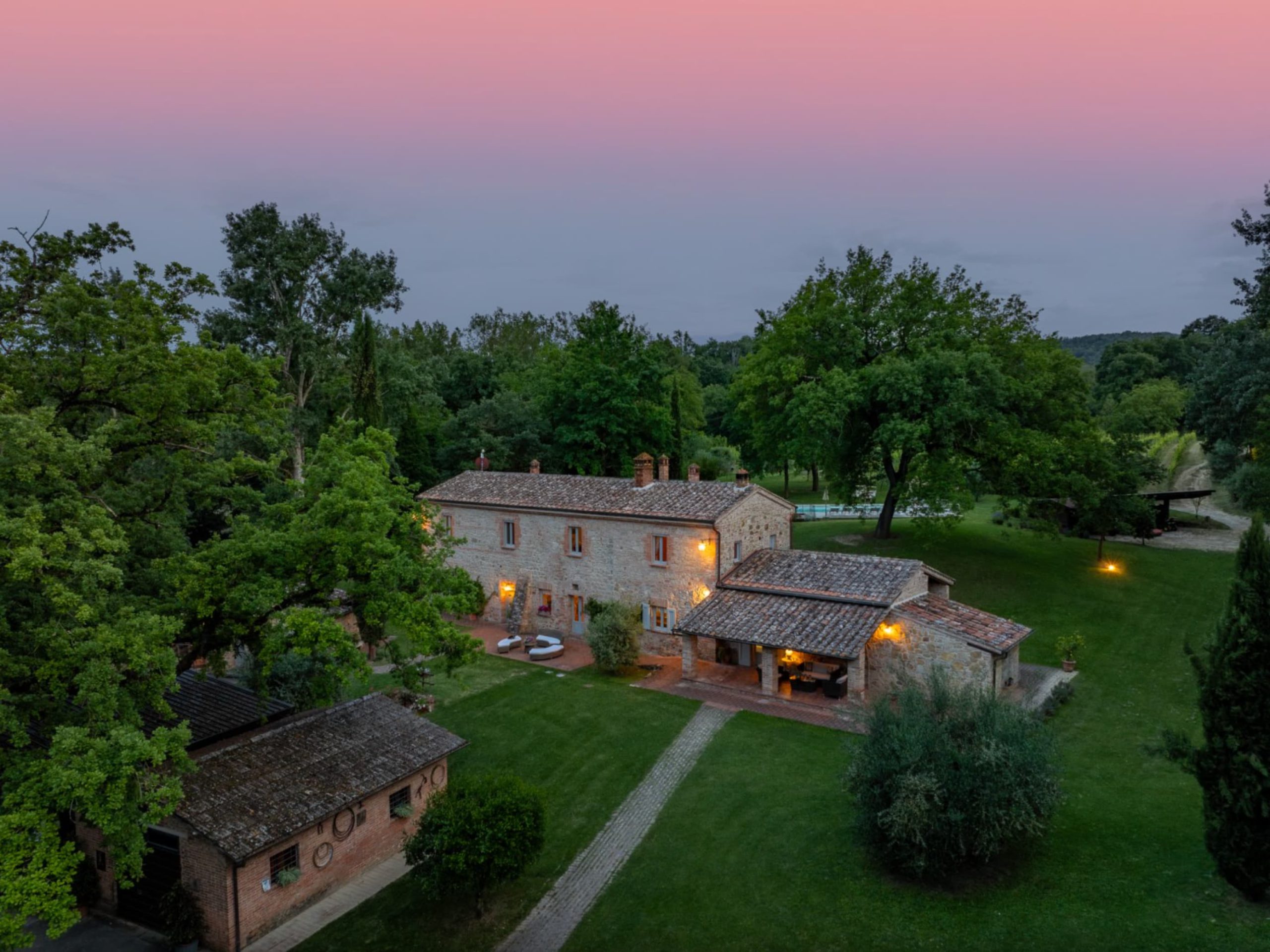
The best months for Tuscany are May, June and September. May has the countryside at its greenest and the cities still walkable, June combines long days with a swimmable sea, and September brings the grape harvest and empties the roads after the first fortnight. July and August are hot and crowded, peaking around the middle of August. From November to March the region is cheap and almost empty, and it is the right time for the art cities.
Three questions that decide your month
Tuscany is visited in very different ways, and the right season depends on what you have in mind.
Do you want the cities? Florence, Siena, Lucca and Pisa are walked, and walking at midday in July is hard work. April, May, October and November are the months in which the cities are genuinely enjoyable, without queues and without planning around the heat.
Do you want the sea? The Tuscan coast is comfortable roughly from mid-June to mid-September, a shorter window than southern Italy. Outside those months the Versilia and the Maremma remain beautiful but they are not beach destinations.
Do you want the countryside and the food? Then the strong months are different ones: September for the grape harvest, October and November for new olive oil and white truffle, March and April for the landscape waking up.
Month by month, at a glance
| Month | Character | Cities | Crowds |
|---|---|---|---|
| January | Cold, quiet, lowest prices | Ideal | Very low |
| February | Still winter, Viareggio Carnival | Ideal | Low |
| March | Spring begins, countryside green | Excellent | Low |
| April | Full green, Easter, mild days | Excellent | Medium, peaks at Easter |
| May | The best month for landscape and light | Excellent | Medium |
| June | Manageable heat, sea open, festival season | Good | Building |
| July | Hot, cities demanding, Palio on the 2nd | Hard work | High |
| August | Peak heat and numbers, Palio on the 16th | Avoid at midday | Very high |
| September | Harvest, clear light, empties mid-month | Excellent | High then falling |
| October | Olives, foliage, mild | Ideal | Low |
| November | New oil, white truffle, rain | Ideal | Very low |
| December | Mild in the cities, festive | Ideal | Low, rises at Christmas |
Spring: March to May
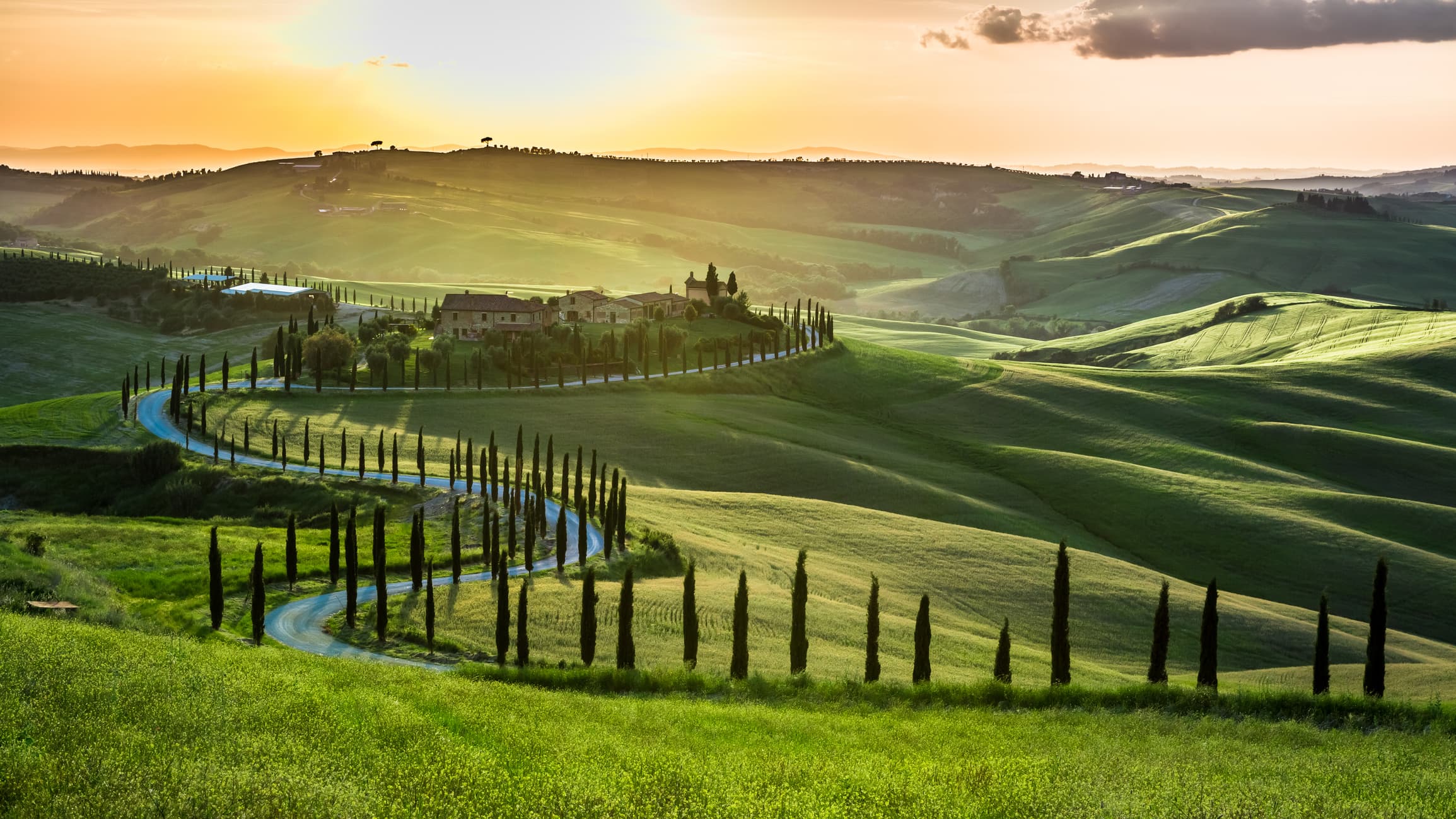
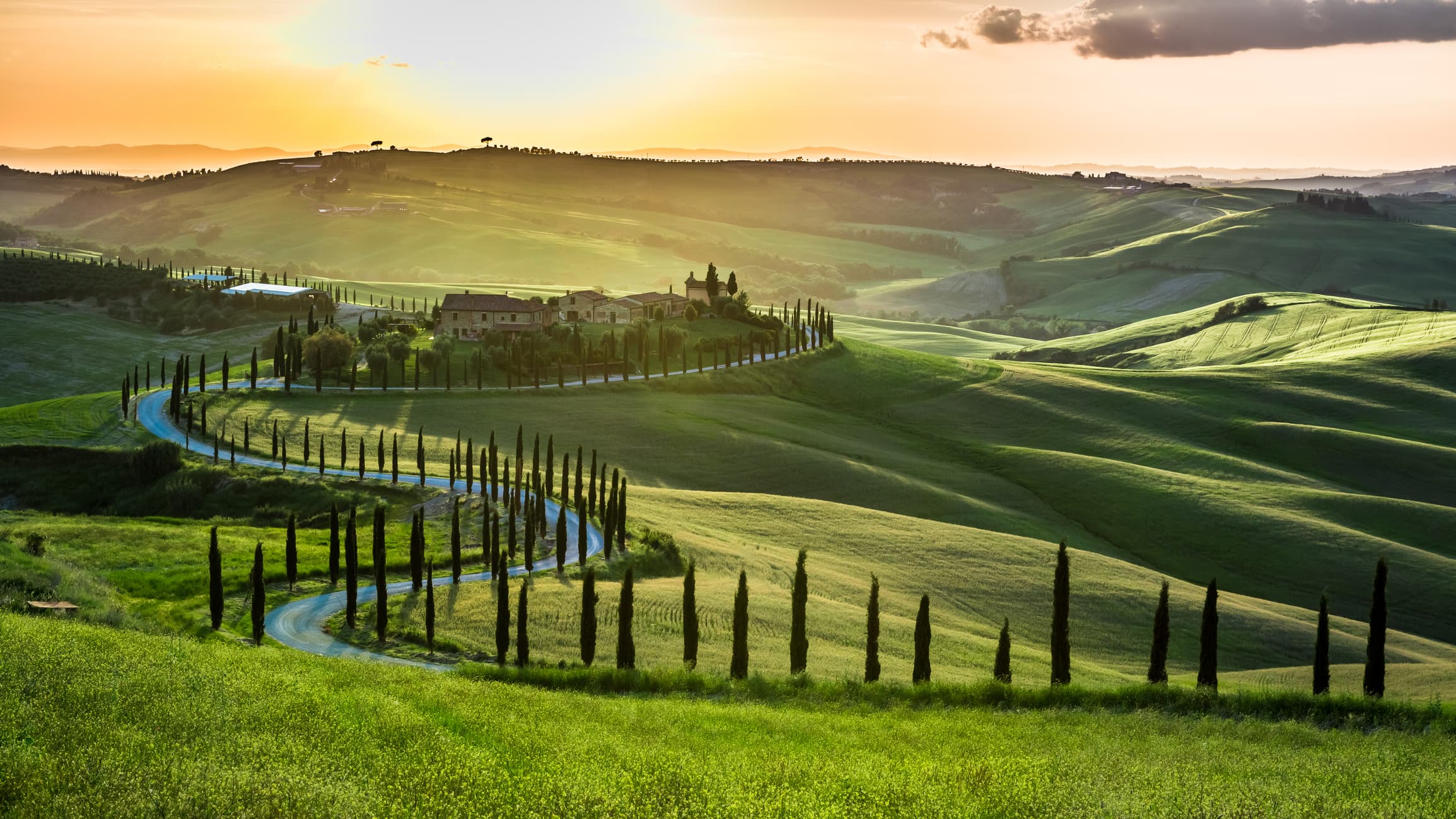
This is the season when the Tuscan countryside is green, and it stays green for only a few weeks before the summer dries it out.
March opens the landscape. The days lengthen, the fields are still bright, the cities are empty and prices are low. It is an underrated month and one of the best for Florence.
April brings Easter and with it the Scoppio del Carro, which takes place in Florence on Easter morning in front of the Duomo: a cart drawn by oxen, and a dove-shaped rocket sent down a wire into it. The dates move each year with Easter. Outside that week, April is ideal for walking and for the cities.
May is, for many visitors, the best month of all. The landscape is at its peak, the light lasts into the evening, everything is open, and the pressure is still a long way from the summer level. The only thing missing is the sea, which in May is still cold.
Summer: June to August
June is the best of the three summer months and the richest in festivals. On 16 June Pisa lights the Luminara di San Ranieri, with the façades along the Arno outlined by thousands of small lamps. On 24 June Florence celebrates its patron saint with the final of the Calcio Storico in Piazza Santa Croce and fireworks over the river. On the penultimate Saturday of the month Arezzo rides the Giostra del Saracino by night in Piazza Grande.
July is hot and full. On 2 July Siena runs the first Palio of the year, in honour of the Madonna di Provenzano: ten of the seventeen Contrade, three laps of Piazza del Campo, and a city that lives the event all year round. Anyone not attending should know that Siena is impossible for anything else in those days.
August is the peak. The second Palio runs on the 16th, in honour of the Assumption, and around the middle of the month the region is at maximum occupancy. On the last Sunday of August Montepulciano holds the Bravìo delle Botti, with barrels rolled uphill between the town’s districts. The heat in the inland valleys is serious and the cities work only early in the morning or in the evening.
Autumn: September to November
September has a strong claim to being the best month. Arezzo runs the daytime Giostra del Saracino on the first Sunday. The grape harvest runs through the month, in Chianti as at Montalcino and Montepulciano, and the estates are at their most interesting to visit. After the middle of the month, once Italian schools return, the roads and the cities change rhythm entirely.
October is mild, clear and almost empty. The olive harvest begins, the woods of the Casentino and the Garfagnana turn, and the cities can be walked without queues. It is arguably the best month for anyone coming principally for Florence and Siena.
November is the month of new oil and white truffle. At San Miniato, between Florence and Pisa, one of Italy’s most important white truffle fairs runs across the November weekends. Rain becomes a factor, but for food this is the richest moment of the year.
Winter: December to February
Tuscan winter is cold inland and mild on the coast, and it is the season when the cities belong to the people who live in them.
December is quiet until Christmas, then it fills. Florence without the queues at the Uffizi is a different experience from the summer one.
January is the cheapest and quietest month of the year. The hills are bare but the cities are at their best.
February brings the Viareggio Carnival, with allegorical floats parading along the seafront across several Sundays. Towards the end of the month the countryside begins to move again.
Choosing by what you want
- Art cities without queues — October to March, with October and November the best.
- Landscape and countryside — May, or late September and October.
- The sea — mid-June to mid-September, with September the quietest.
- Wine and the harvest — September.
- New oil and truffle — November.
- Historic festivals — June for Pisa, Florence and Arezzo; July and August for the Palio.
- Lowest prices — January and February.
Frequently asked questions
What is the best time to visit Tuscany?
May, June and September. May has the greenest landscape and cities that are still calm, June combines long days with a swimmable sea, and September brings the harvest and empties out after the first fortnight. October is the best month for anyone coming mainly for the art cities.
When is Tuscany least crowded?
From November to March, with January the quietest month of all. October and the second half of September are also considerably calmer than the summer.
Is August too hot in Tuscany?
In the inland valleys the heat is serious and the cities only work early in the morning or in the evening. The countryside remains enjoyable if the house has shade and a pool, but for anyone coming mainly for Florence and Siena, August is not the month.
When can you swim in Tuscany?
Roughly from mid-June to mid-September. The window is shorter than in southern Italy, and September is when the sea is warmest and the beaches emptiest.
When is the Palio di Siena?
Twice a year, always on the same dates: 2 July in honour of the Madonna di Provenzano and 16 August in honour of the Assumption, in Piazza del Campo. In the days before each race the city is given over entirely to the event.