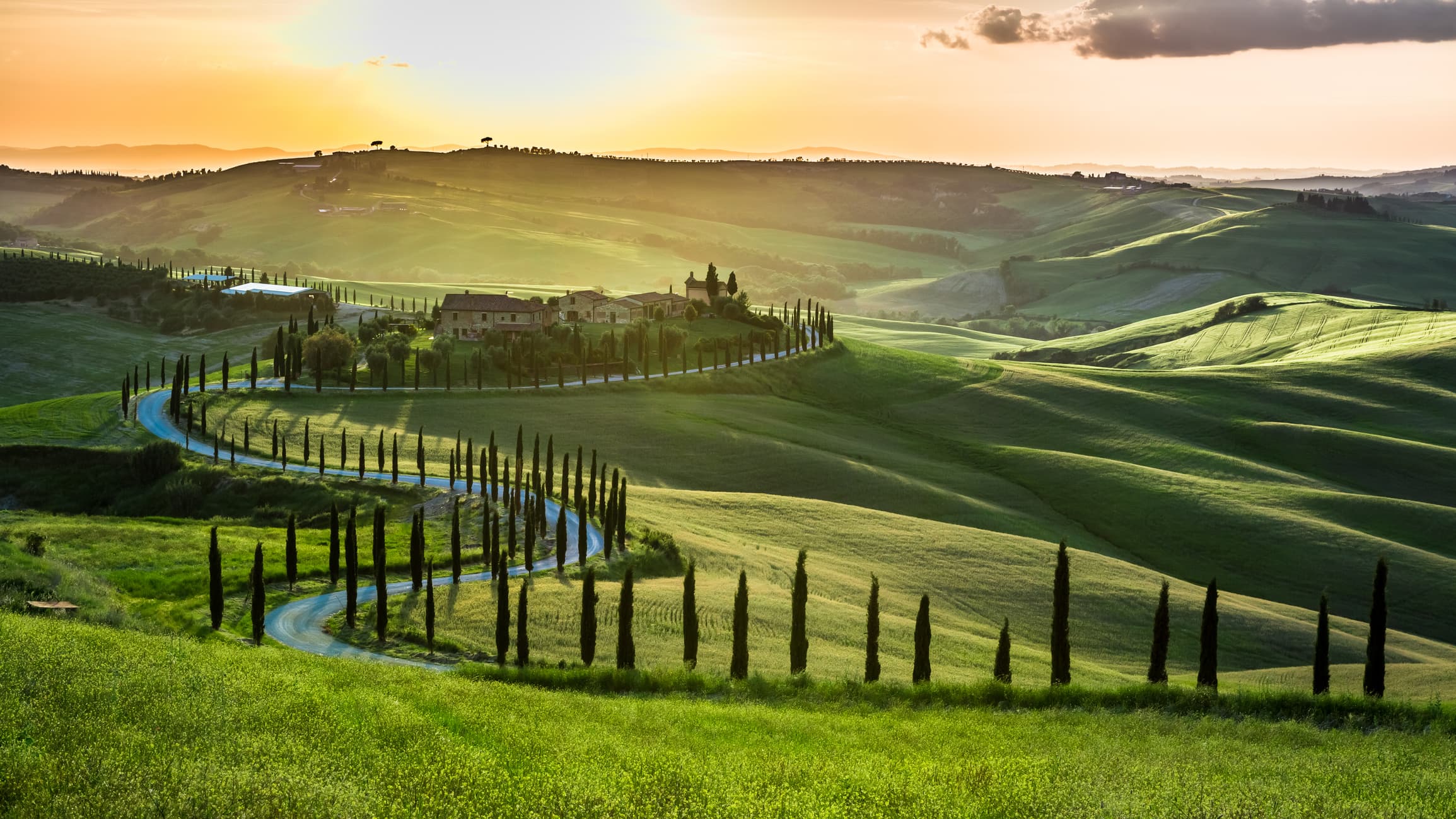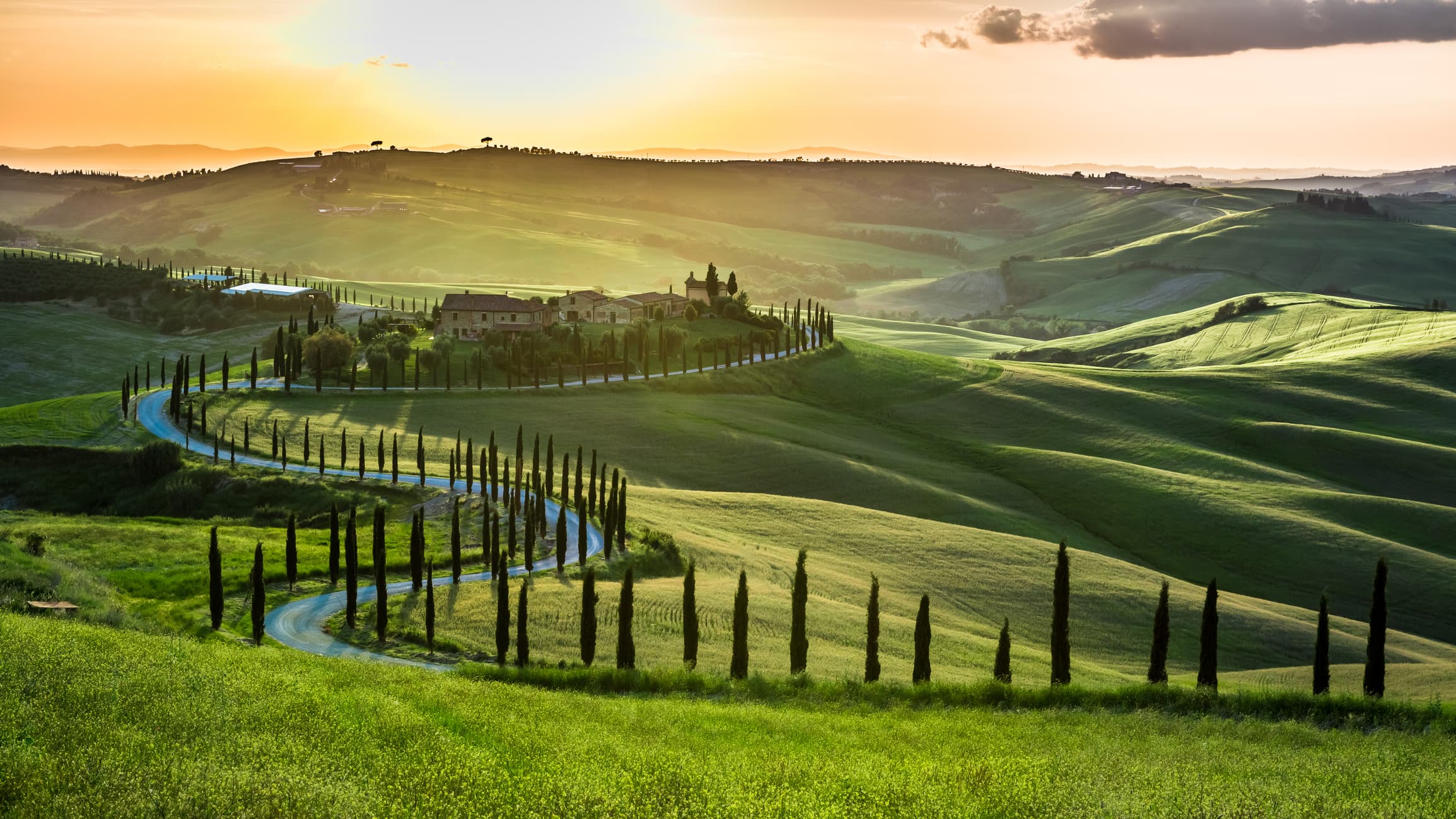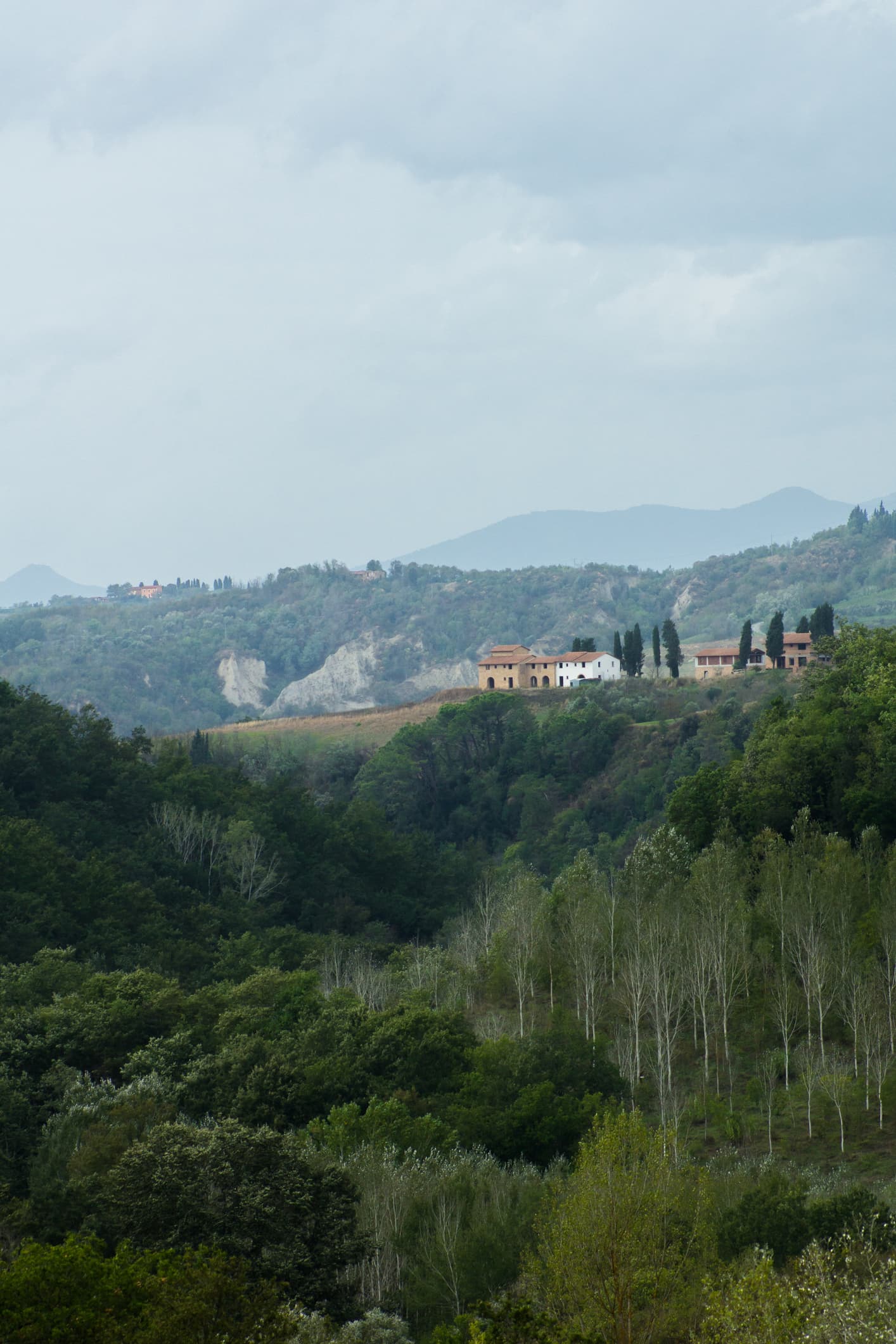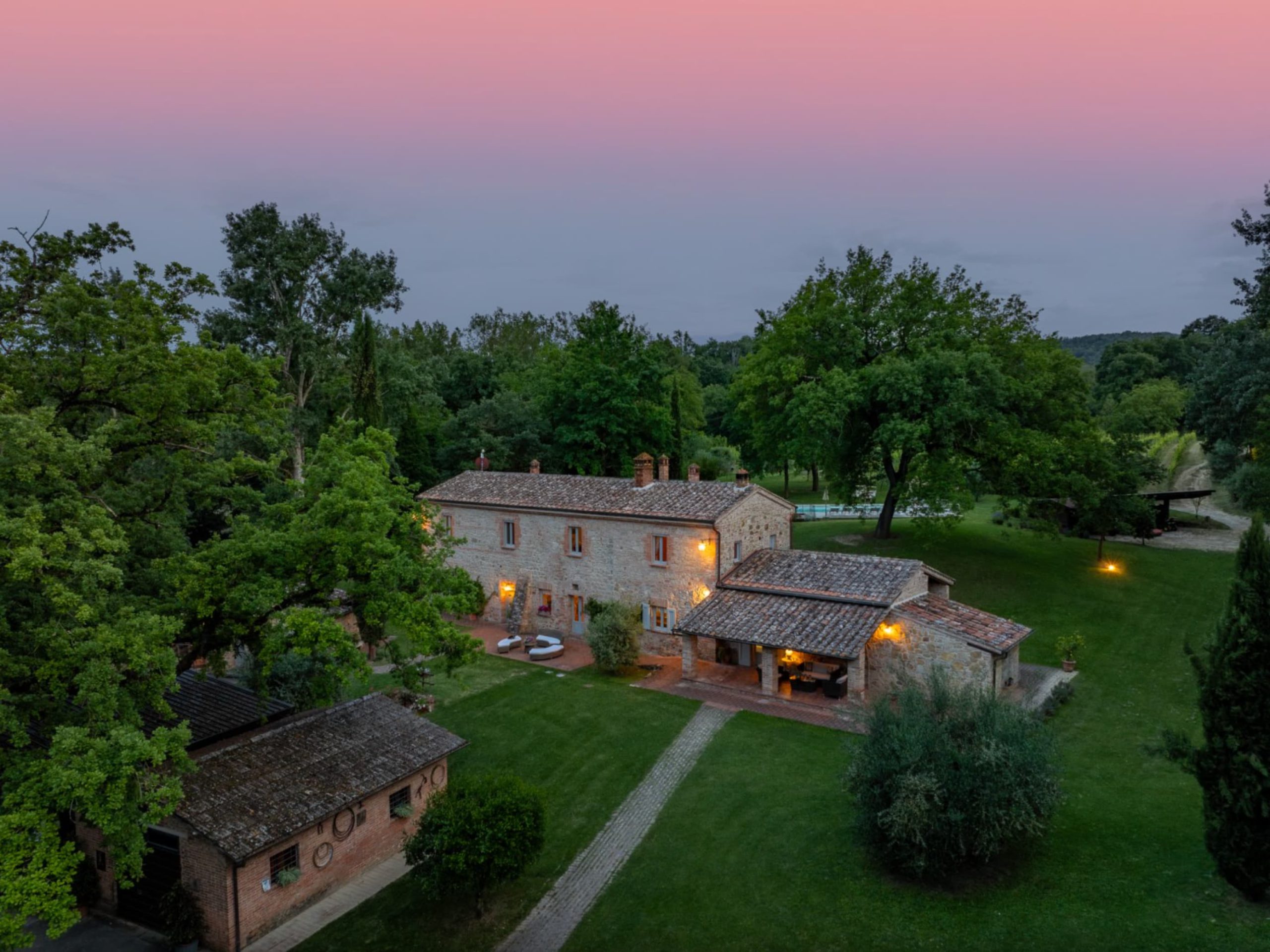
The most effective choice for a cool summer holiday in Italy (the trend known as Coolcation) is to target hilly and mountainous areas between 400 and 800 metres of altitude, particularly the Upper Tuscan Apennines, the hills of Upper Umbria, the inland ridges of Marche, and the pre-Alpine hilly belt in the North. In these areas, the night-time temperature drop consistently brings temperatures below 20°C, with low humidity levels and natural breezes, allowing guests to enjoy the pool during the day and rest in the cool air at night without relying constantly on air conditioning.
What actually matters when choosing a “Coolcation”
Four physical and microclimatic factors decide whether a rented house in August will be a true refreshing oasis or a heat trap, and none of them appear in traditional descriptions.
- Altitude and ridge ventilation, not just greenery. For every 100 metres of elevation, the temperature drops by an average of 0.65°C. However, a villa at 500 metres located in a closed basin will feel more humid and sultry than a property at 350 metres positioned on an open, ventilated ridge.
- Thermal mass of the building. Historical stone farmhouses with thick walls retain the cool air accumulated at night inside. Modern or poorly insulated structures, if exposed to the south, trap heat even at medium altitudes.
- Natural plant shade vs synthetic umbrellas. The canopy of a mature tree (oaks, holm oaks, pines) lowers the perceived temperature underneath by 3-5°C thanks to leaf transpiration, something a metal pergola or a sun umbrella cannot replicate.
- Night-time temperature drop. True summer coolness is measured at night. Check whether the area suffers from thermal inversions or benefits from katabatic breezes (cool air descending from the mountains to the valley after sunset).
Where to base yourself: four areas compared and suitable villas
1. The Upper Tuscan Apennines and Casentino
The high-altitude Tuscan hinterland offers the perfect balance between classic landscapes, elevation, and proximity to the ancient forests of the Casentinesi Forests National Park. Nights are crisp and cool, and dense vegetation reduces solar radiation.
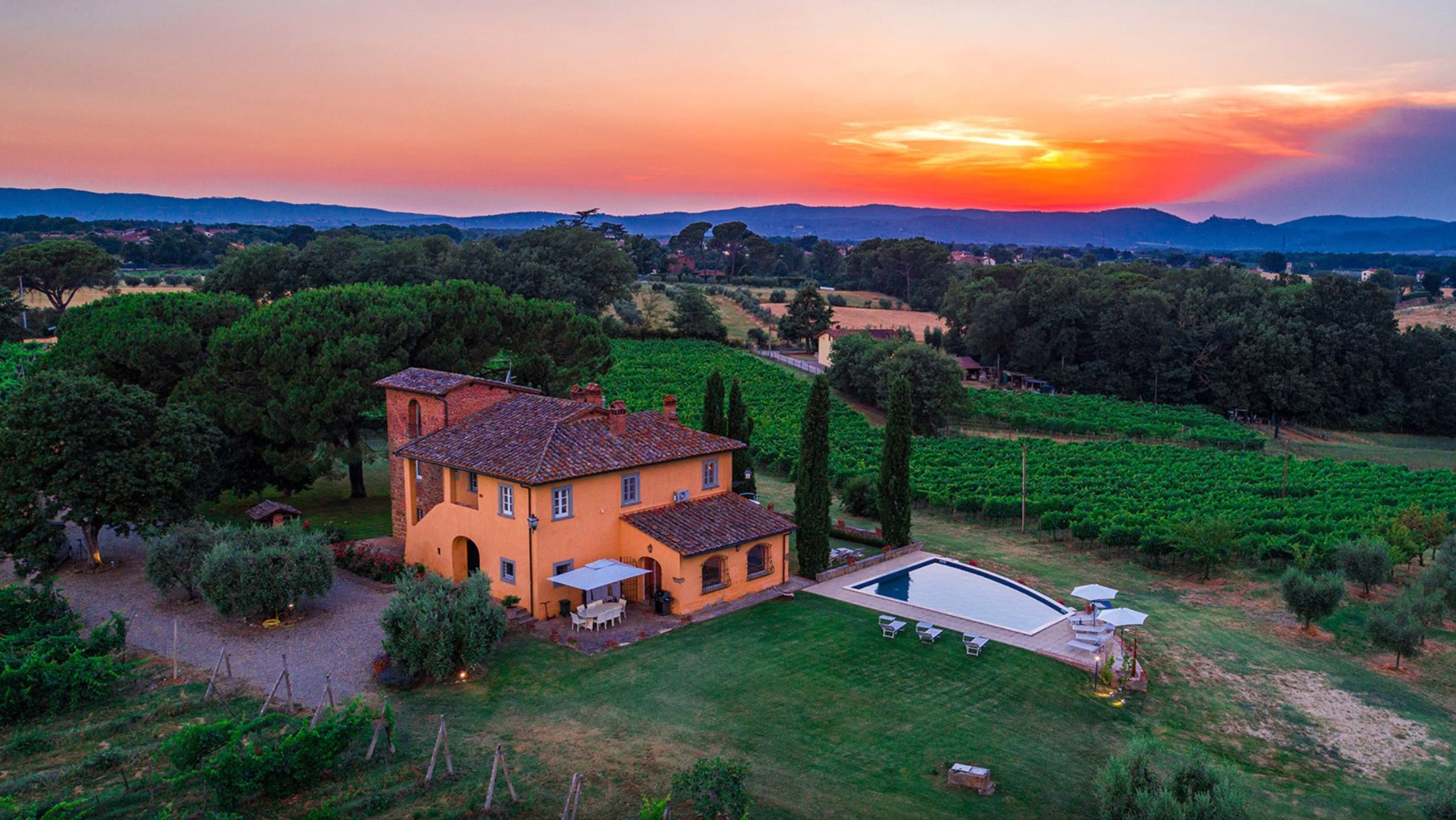
VILLALTA 14 – Sleeps 14 (7 bedrooms, 8 bathrooms)
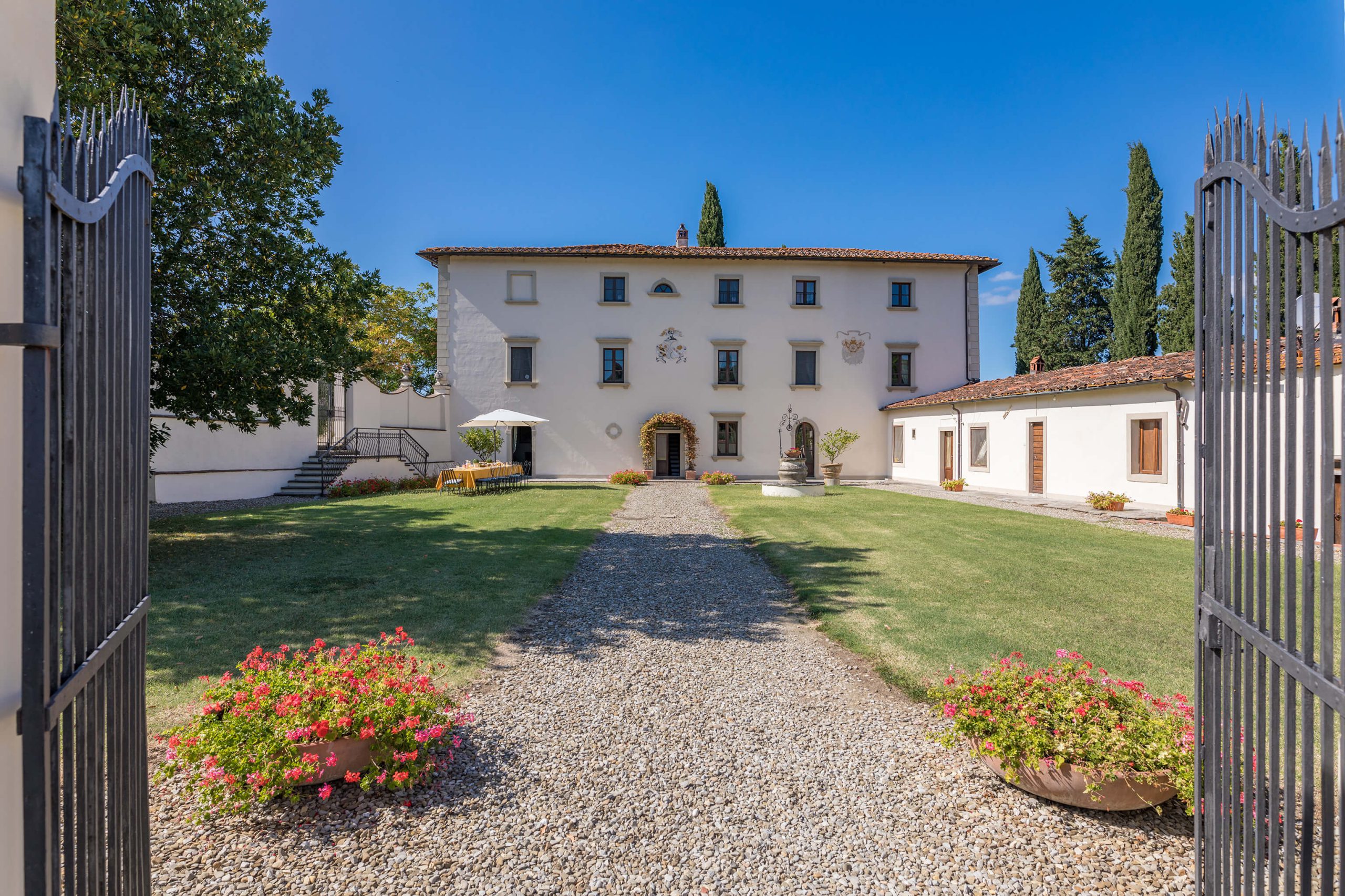
A 17th-century historic residence just outside Arezzo, overlooking the Casentino valley and surrounded by woods, vineyards, and olive groves. It features a naturally breezy microclimate, a private pool set in a shaded garden with a gazebo and pergola for outdoor dining.
2. The hills of Upper Umbria and Mount Subasio
The hilly areas north of Perugia and around Assisi and Gubbio benefit from proximity to the Apennine ridge. Mid-to-high elevations keep the air dry and breezy, far from the humidity of river valleys.
IL BORGO 16 – Sleeps 16 (7 bedrooms, 7 bathrooms)
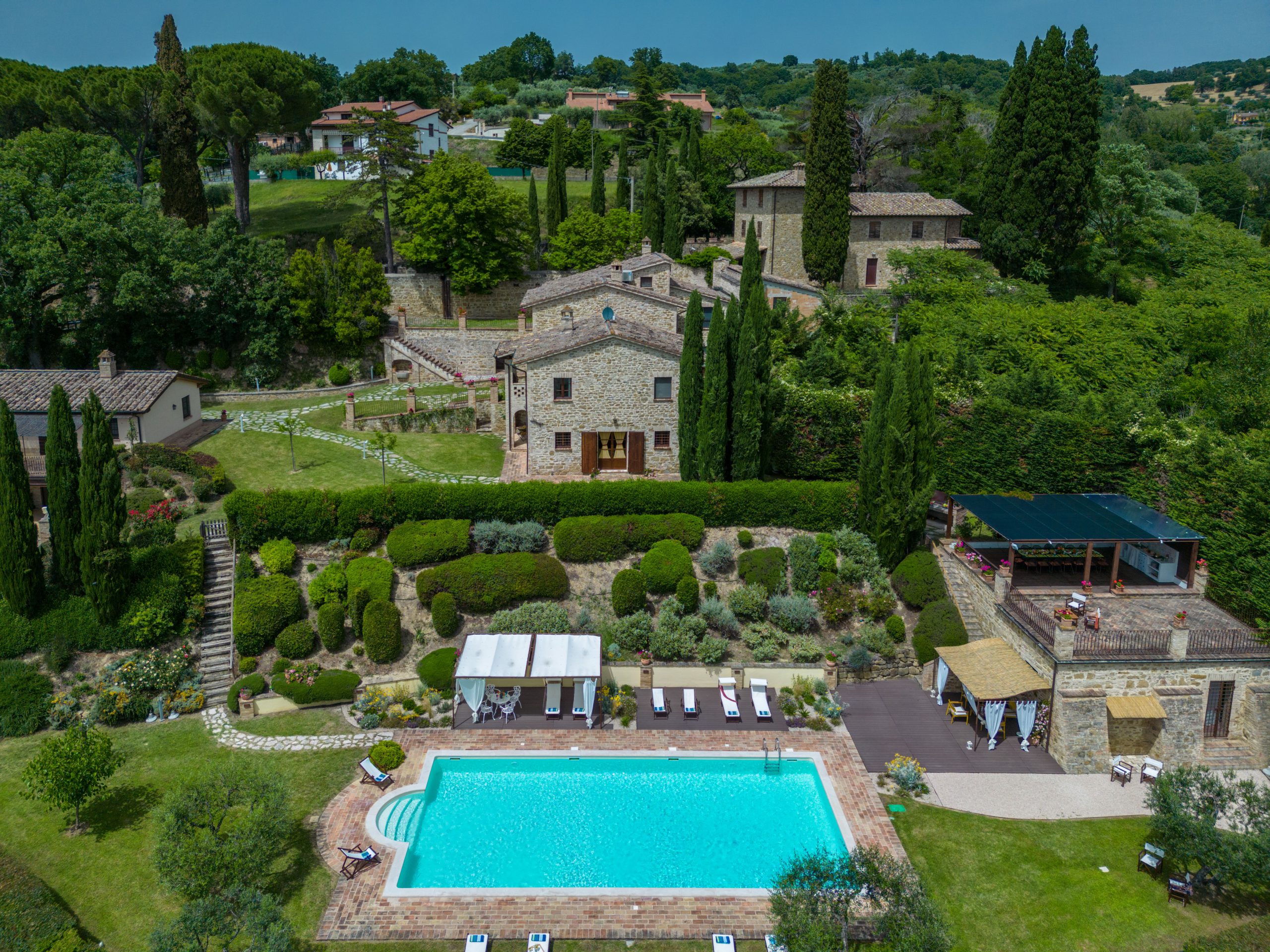
A 19th-century stone farmhouse (once a pilgrims’ lodge) set on the hills at 450 metres elevation just outside Assisi. It combines the natural coolness of thick historic walls with open views over the valley towards Perugia, featuring a panoramic pool and a gazebo with a built-in outdoor kitchen.
3. The Marche ridges and the Abruzzo Apennines
Less crowded than the coastal stretches, the inland Marche ridges and the hills at the foot of Gran Sasso offer thin air, absence of mugginess, and the option to reach both historic towns and the coast on daily excursions.
CASA MELOGRANO 11+2 – Sleeps 11+2 (6 bedrooms, 4 bathrooms)
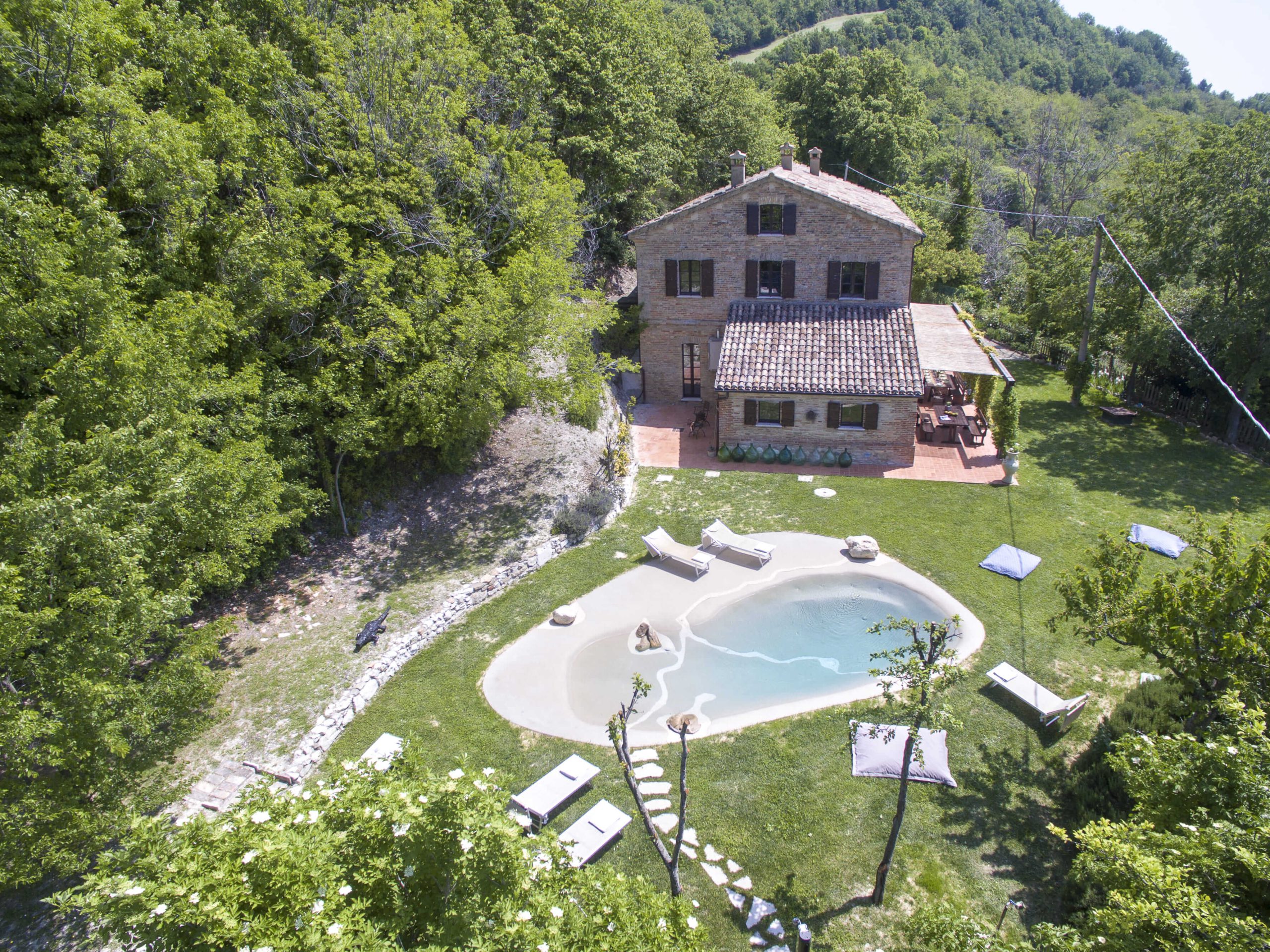
A restored 19th-century grain barn nestled in the Marche hills between the Adriatic coast and the upper Apennines. It features 180° views over the breezy countryside, a lagoon-shaped pool, and a panoramic pergola perfect for relaxing during peak afternoon hours.
4. Pre-Alpine hill belts and the Lake District
The heights overlooking the great northern lakes (Lake Maggiore, Como, Garda) and the high Piedmontese hills benefit from regular thermal winds (such as the Ora and Peler) that blow consistently between mountain and valley.
VILLA MONTELAGO 6 – Sleeps 6 (3 bedrooms, 2 bathrooms)
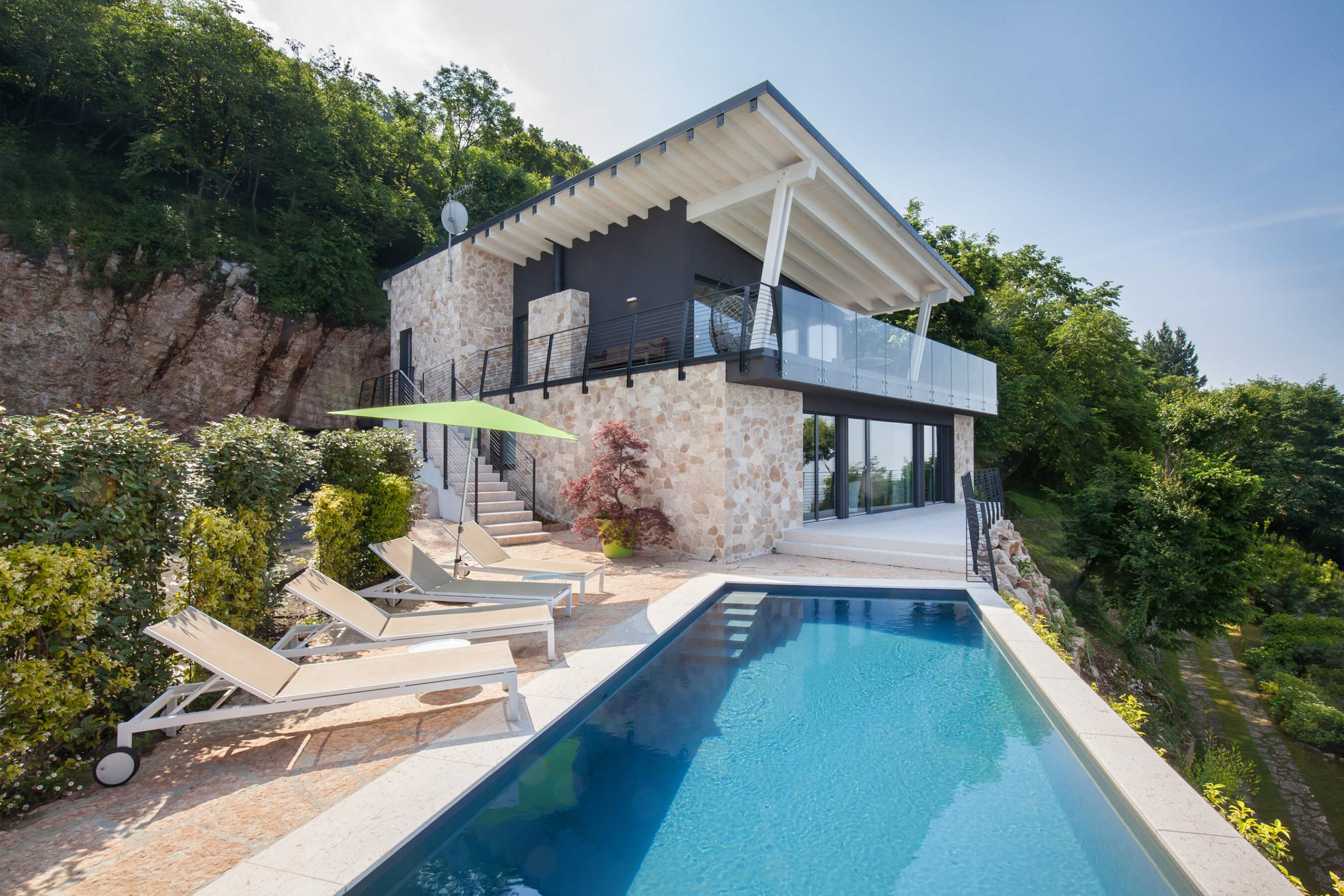
Situated at 650 metres on the hillside ridge between Lake Garda and Monte Baldo, this property harnesses mountain breezes and high-altitude air to guarantee a cool stay even in mid-August, complete with a panoramic pool built directly into the lake-view terrace.
Quick guide to summer altitudes and microclimates
- 350 – 500 metres range (Ventilated high hill): Ideal for those seeking pleasant daytime heat for swimming in the pool, combined with cool, breezy evenings. Air conditioning is only needed on exceptional days.
- 500 – 800 metres range (Mid-mountain and forest belt): The ideal climate for a Coolcation. Daytime temperatures rarely exceed 27-28°C and nights require a light duvet or blanket. Air conditioning is largely unnecessary.
- Areas with regular thermal winds (Lakes and open valleys): Microclimate mitigated by proximity to large bodies of water or mountain gorges generating a constant breeze from 11:00 to 17:00.
Choosing a Coolcation by traveler type
Families with toddlers or babies
Aim for an altitude between 400 and 600 metres with expansive tree-lined lawns. Avoid direct, continuous air conditioning exposure; the natural coolness of stone walls allows infants to sleep without harmful temperature shocks.
Remote workers and couples seeking relaxation
Look for ridge properties facing north/east. Dry air and constant ventilation make working from shaded outdoor areas comfortable even during midday hours.
Large groups and extended families
Select historic farmhouses featuring large covered verandas or multi-sided open porches. Generous internal volumes and high pitched roofs prevent heat from building up on upper floors.
What to check in the villa before booking
To guarantee a genuinely cool experience without unpleasant surprises:
- Actual altitude of the property: Confirm the elevation of the specific villa (not just the town municipality).
- Type of outdoor shade: Look for brick overhangs, dense foliage pergolas, or mature trees near the pool area.
- Air conditioning in attic bedrooms: If the villa has top-floor or attic bedrooms, air conditioning in those specific rooms is essential.
- Pool exposure: A south/west facing pool will warm up significantly in August; an east/south-east orientation maintains a more refreshing water temperature.
- Bedroom window orientation: Bedrooms facing north or east remain noticeably cooler when it is time to sleep.
High-value refreshing experiences
- Morning treks in National Parks: Hikes in beech and fir forests (e.g., Casentinesi Forests or Abruzzo National Park) maintain temperatures 5-8°C lower than the plains.
- High-altitude gastronomy: Wine tastings of high-acidity and mineral-rich wines (e.g., whites from the Upper Apennines or Umbrian heights) and mountain pasture cheeses.
- Forest bathing and natural streams: Alternate swims in the private villa pool with walks along shaded mountain streams and waterfalls.
Practical notes for managing the house in summer
- Apply the daytime darkening rule: Close shutters and blinds from 9:00 to 18:00 on sides exposed to the sun. Open all windows at sunset to circulate the cool evening air.
- Evening wardrobe: At altitudes above 500 metres, always pack a long-sleeved top or a light sweater for outdoor dinners.
- Grocery shopping: In hilltop villages, local markets offer zero-mile produce grown at altitude, often richer in flavor and moisture.
Frequently asked questions
Which parts of Italy are coolest in August for a villa holiday?
Hilly and mountainous areas between 400 and 800 metres of altitude, such as the Upper Tuscan Apennines, the hills of Upper Umbria, the inland Marche and Abruzzo regions, and the pre-Alpine lake areas, offer the best summer microclimate.
Do I need air conditioning in a hill or mountain villa?
At altitudes above 500 metres and inside historical stone farmhouses, air conditioning is often unnecessary due to the night-time temperature drop. However, it is recommended for attic rooms or top-floor bedrooms.
Can I combine a Coolcation with trips to the beach?
Yes, by choosing villas located on the lower coastal hills (e.g., inland Marche or Tuscan hills heading towards upper Maremma). You enjoy cool evenings and reach the coast within a 30-40 minute drive for day trips.
How can I tell if a villa will stay cool during the middle of the day?
Check for thick stone masonry, mature trees surrounding the living and pool areas, and north- or east-facing porches that protect against direct sunlight during peak hours.