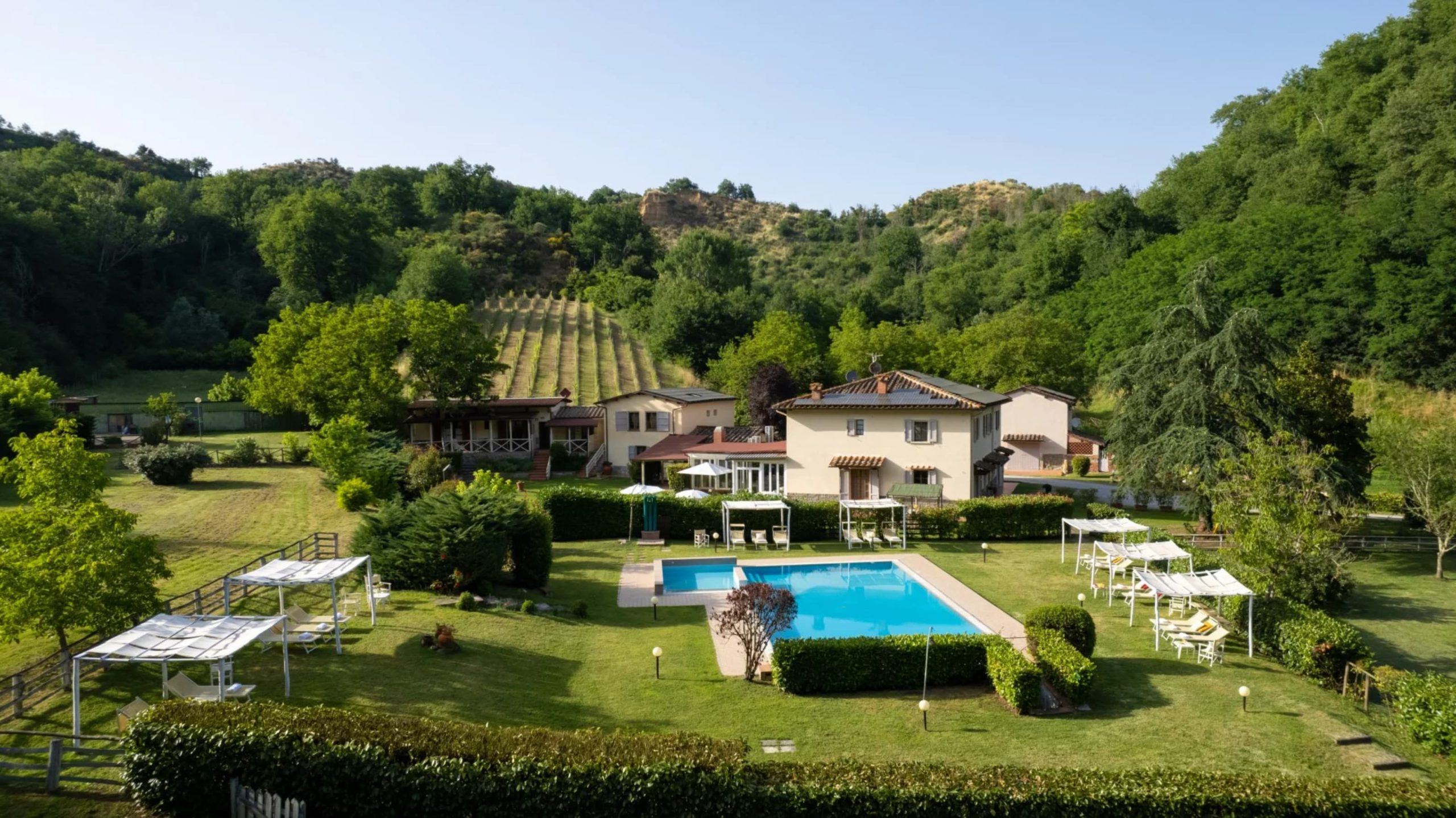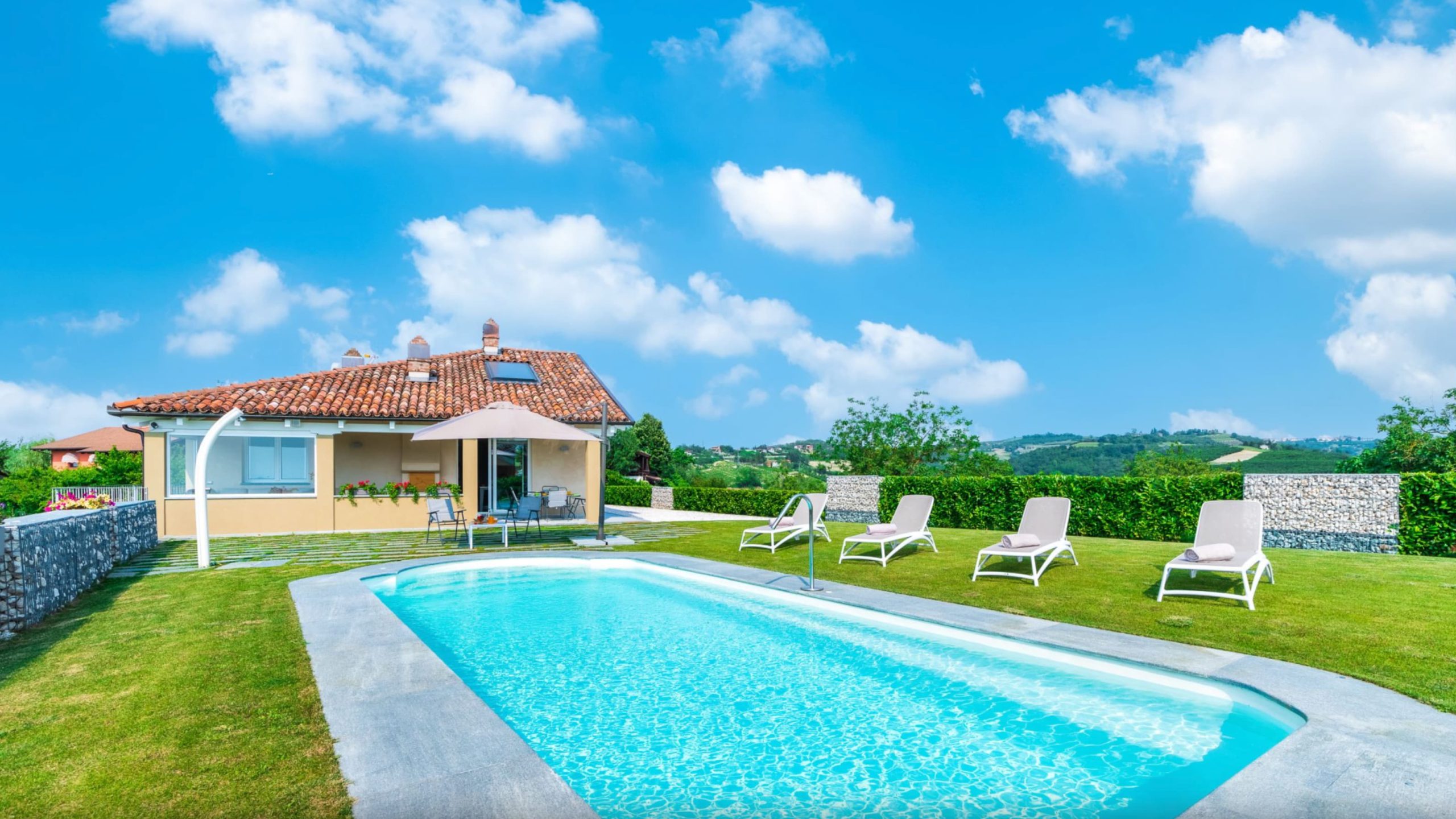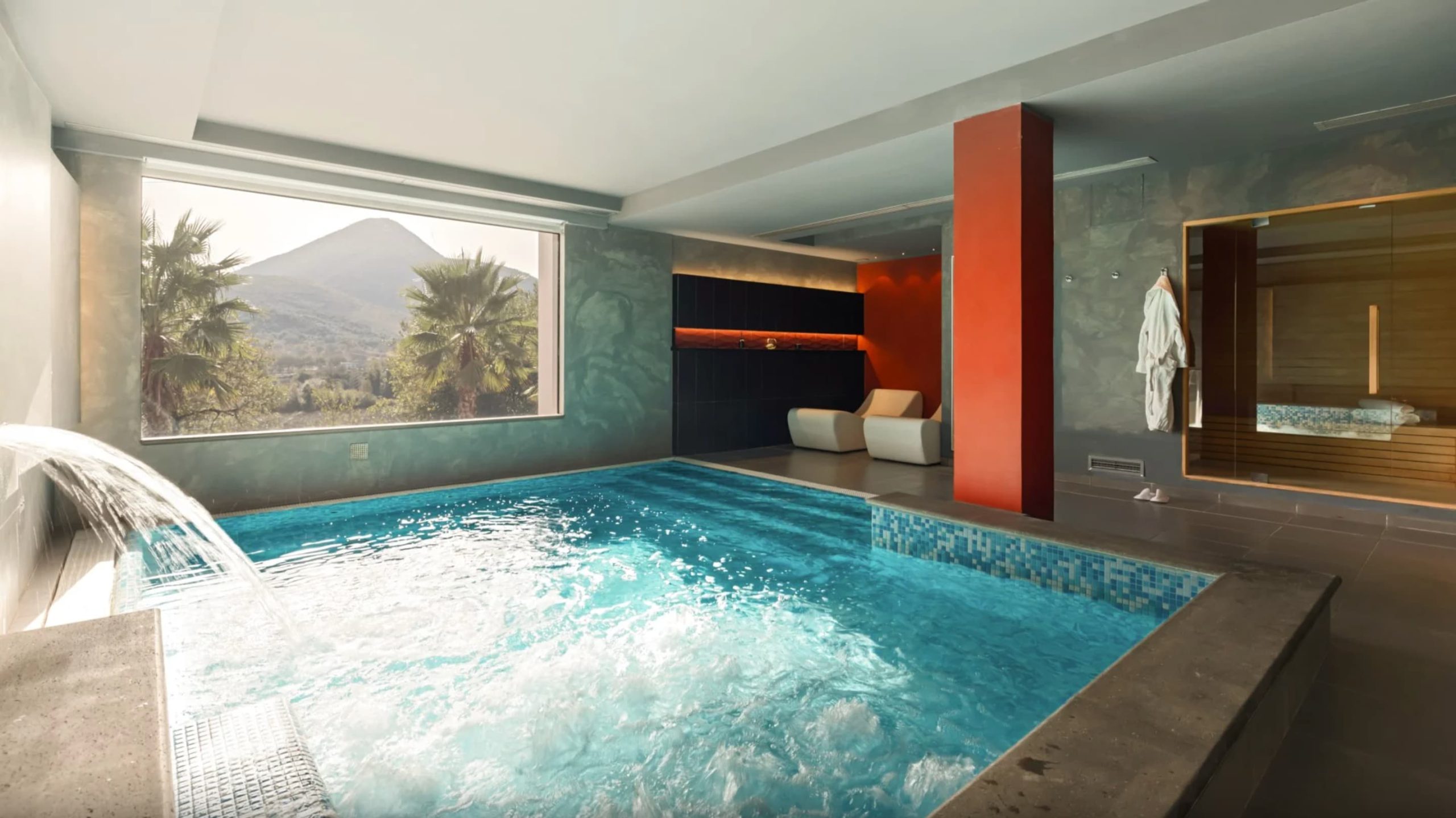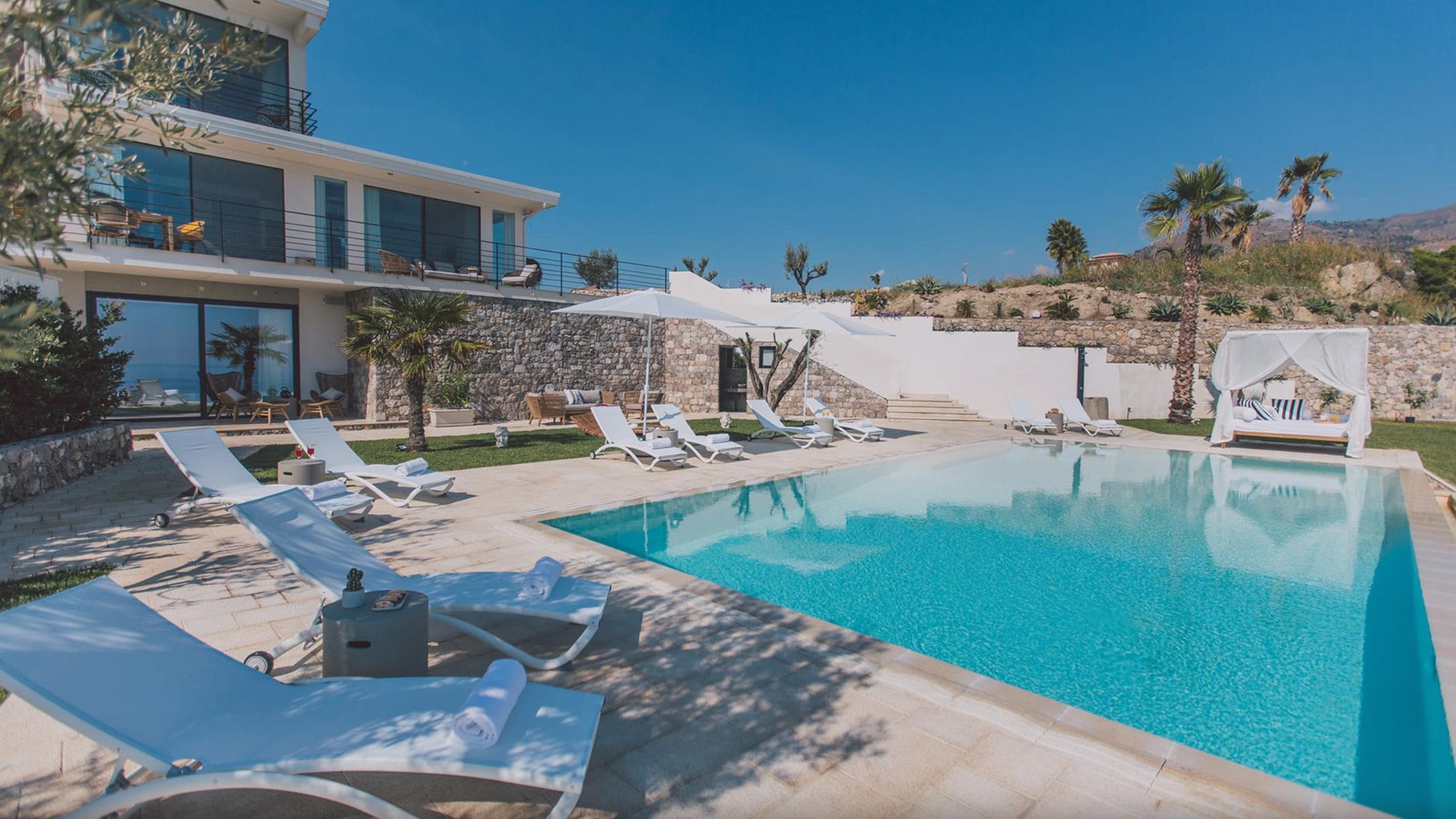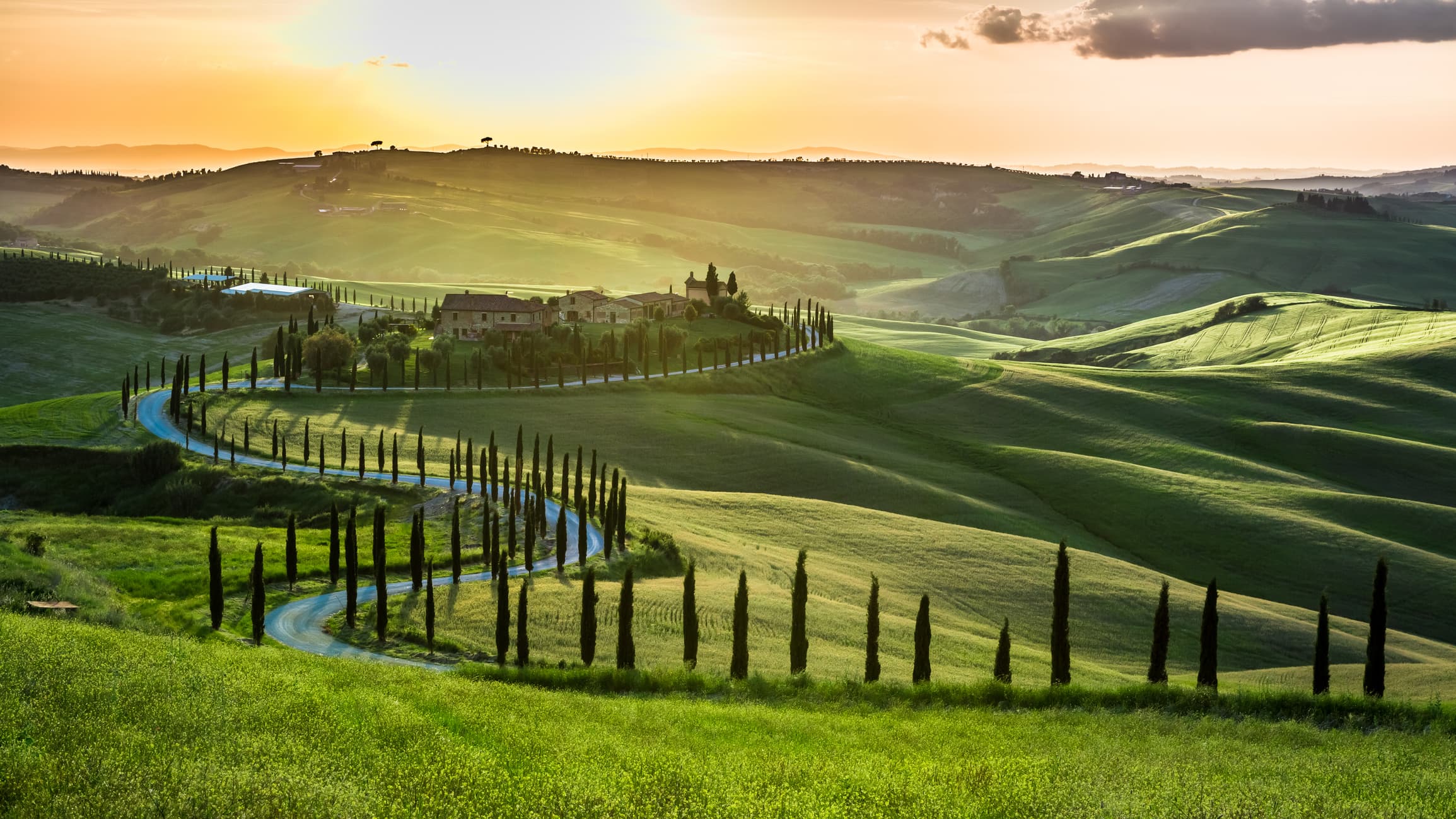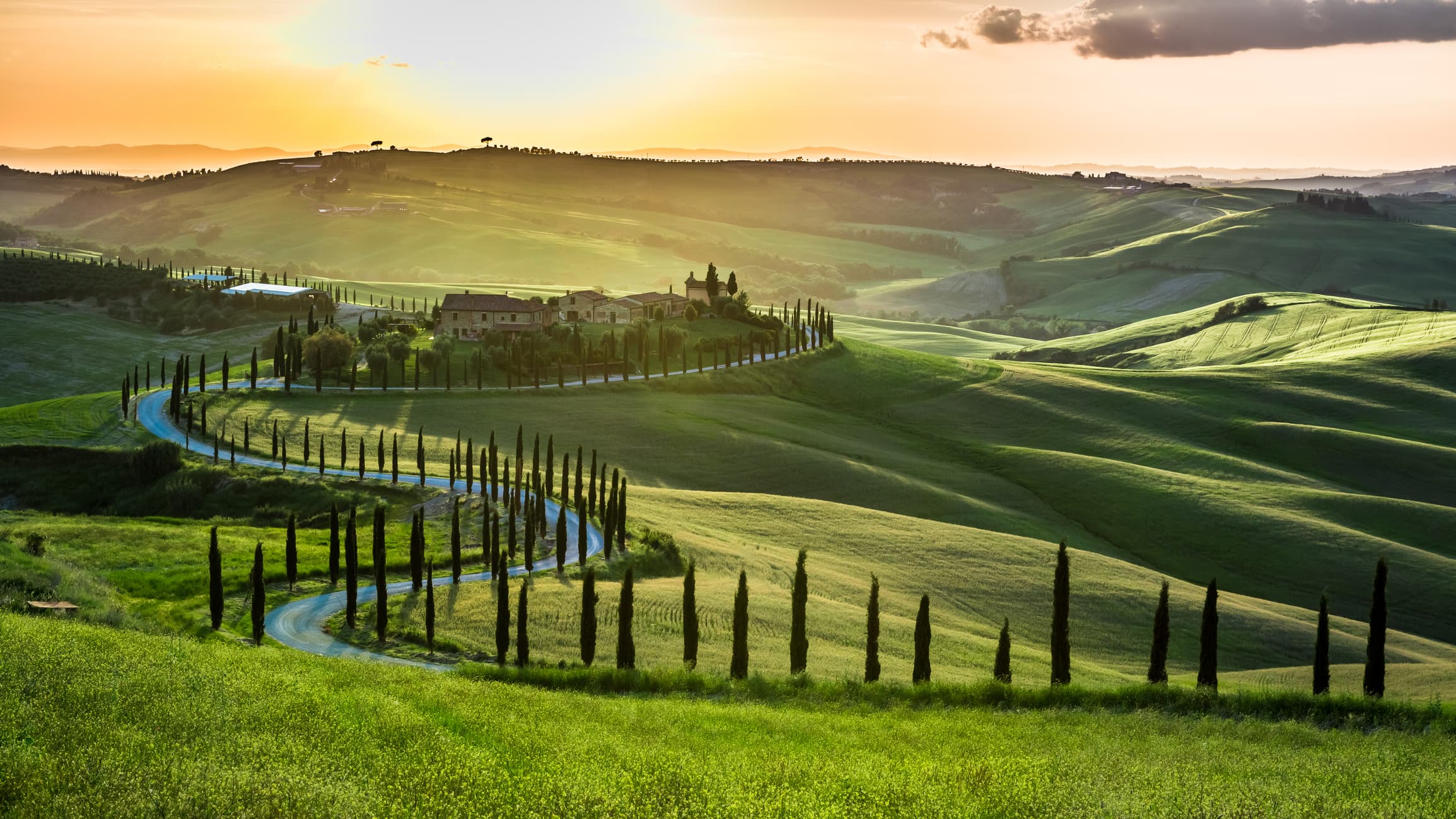
In Le Marche the choice is not really between three options but along one axis: how far from the sea you want to be. The region runs from the Adriatic to mountains of over 2,400 metres in about sixty kilometres, and where you sit on that line decides the temperature at night, the length of your drives and how much of the region you actually see. Most visitors are happiest in the middle band of hills, half an hour from a beach.
The geography, and why it decides everything
Le Marche is built like a comb. Rivers run in parallel from the Apennines down to the sea, and between them lie long ridges of hills, each carrying walled towns along its spine.
This has two consequences for choosing a house. The first is that travelling east to west — from the coast inland — is easy, because you follow a valley. Travelling north to south inland is slow, because you cross ridge after ridge. The second is that altitude climbs fast: twenty minutes from the beach you can already be three hundred metres up, with the nights that come with it.
So the question is not which of three areas, but how far up the comb you want to sit.
On the coast
The Marchigian coastline is long, mostly sandy and organised around family holidays. A house here means walking to the beach and a shorter list of compromises with children.
What it gives you. Beach access without a daily drive, restaurants and shops within walking distance, and the sea breeze in the evening.
What it costs you. July and August on the Adriatic are busy — these beaches are a domestic institution, and the towns work at capacity. Nights are warmer at sea level than anywhere inland. And you are further from the hill towns and the caves that are the region’s real distinction.
Where. The area around Monte Conero is the exception on this coast: cliffs instead of flat sand, Portonovo and Sirolo below them, and hills immediately behind. Further north, the countryside behind Senigallia and Fano gives sea access with more space.
Best for families with young children, and anyone whose holiday is principally about the beach.
In the hills
This is the middle band, roughly between fifteen and forty minutes from the sea, and for most visitors it is the right answer.
What it gives you. Restored farmhouses with land around them, views that run down to the Adriatic on a clear day, nights that cool properly, and a beach that is close enough to use casually rather than as an expedition. You are also within reach of the hill towns in both directions.
What it costs you. You will drive every day, and you need to buy food deliberately rather than wander out for it.
Where. The hills behind the Conero, the countryside around Jesi and the Verdicchio vineyards, the ridges between Macerata and Fermo, and the area around Urbino in the north.
Best for couples and groups who want landscape and sea in the same week without choosing between them.
Deep inland
Further west the hills become mountains and the region changes character entirely.
What it gives you. Real quiet, altitude and cool nights, walking straight from the door, and the Sibillini national park. Prices are lower here than anywhere else in the region.
What it costs you. The sea becomes an hour away, which means one or two trips in a week rather than daily. Restaurants are fewer and further between, and some villages are very small.
Where. The Sibillini foothills around Sarnano and Amandola, the Montefeltro hills inland from Urbino, and the valleys around Genga and the Frasassi caves.
Best for walkers, groups who want a property standing on its own, and anyone travelling in July and August who cares more about sleeping well than about swimming daily.
Matching the area to your trip
| If your priority is | Choose | Distance to sea |
|---|---|---|
| Beach every day, small children | Coast, ideally near the Conero | Walking |
| Landscape and sea in the same week | Hills, 15–40 minutes inland | 20–40 min |
| Art and hill towns | Hills around Urbino, or between Macerata and Fermo | 30–50 min |
| Walking, cool nights, quiet | Sibillini foothills or Montefeltro | 50–70 min |
| Travelling in August on a budget | Deep inland | Around an hour |
What to check before you book
- Ask for driving time to the nearest beach, not the distance. Inland roads follow ridges and valleys, so twenty kilometres can be forty minutes.
- Confirm the altitude. It is the single best predictor of how a house sleeps in July, and it rarely appears in a listing.
- Ask whether the pool is exclusive. On estates with more than one unit it may be shared. Get it in writing.
- Check shade around the pool and terrace. Without a pergola or a mature tree, an outdoor space is unusable from late morning to evening in high summer.
- Air conditioning: which rooms. Not whether the house has it, but whether the bedrooms do.
- Find out what is within ten minutes. A bakery, a shop and somewhere to eat nearby change a week more than any feature of the house.
- Ask about the access road. Many rural properties are reached by an unpaved strada bianca. Usually fine; occasionally relevant to the car you rent.
Frequently asked questions
Where is the best area to rent a villa in Le Marche?
For most visitors, the band of hills between fifteen and forty minutes from the sea. It gives you countryside, cooler nights and casual beach access, and puts the hill towns within reach in both directions. The coast suits families who want to walk to the beach; deep inland suits walkers and anyone travelling in high summer.
Is Le Marche better than Tuscany for a villa holiday?
It is quieter and cheaper, and it has something Tuscany’s most famous areas do not: a coastline within half an hour of the countryside. Tuscany has the greater concentration of famous towns. Le Marche suits visitors who want landscape, art and sea together without the crowds.
How far is the sea from the hill towns in Le Marche?
Usually between twenty and fifty minutes, depending how far inland you are. The region is only about sixty kilometres wide from the Adriatic to the mountains, so nothing is genuinely far from the coast.
When should I book a villa in Le Marche?
For July and August, in winter or early spring. The region is less pressured than Tuscany or the Amalfi Coast, but the best-positioned properties still go early, particularly those close to the Conero.
Do I need a car if I rent a villa in Le Marche?
Yes, unless you are staying inside a coastal town. Rural properties are not served by public transport, and the hill towns and caves are effectively unreachable without one.
Emma Villas manages villas across Le Marche, from the countryside behind the Conero to the hills around Urbino and the foothills of the Sibillini. If you would like help matching an area to your group and your dates, our team knows these properties individually.