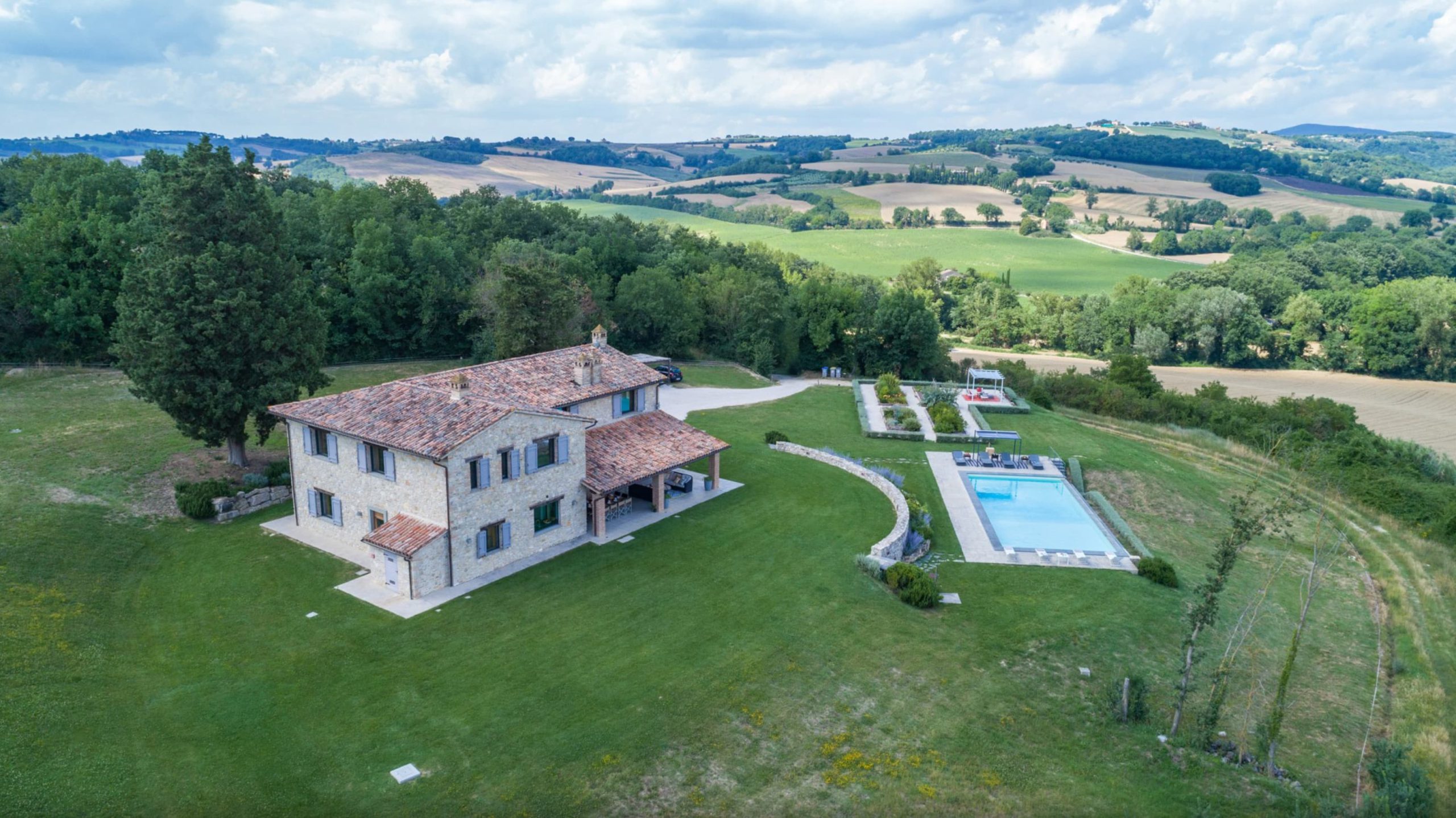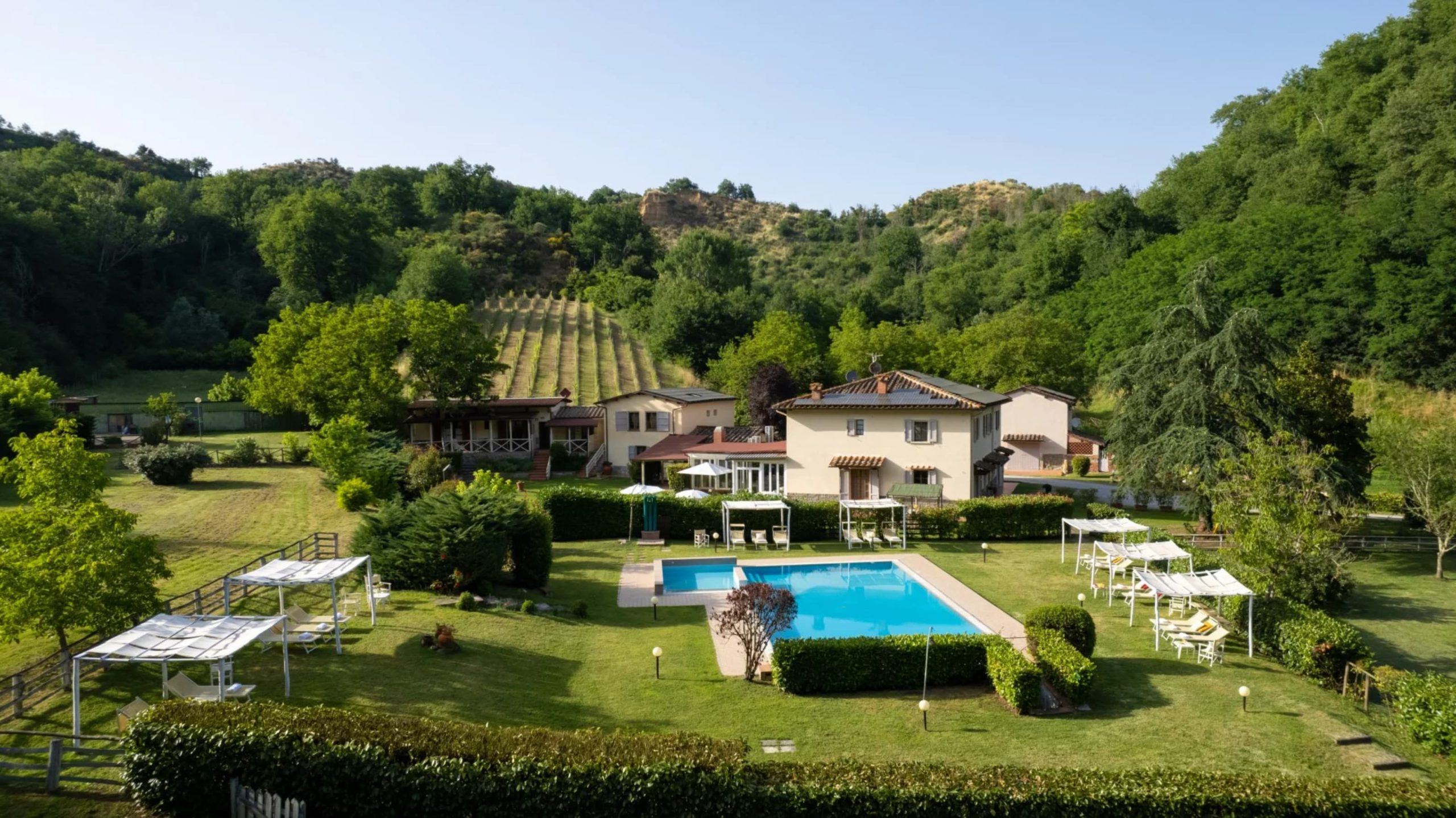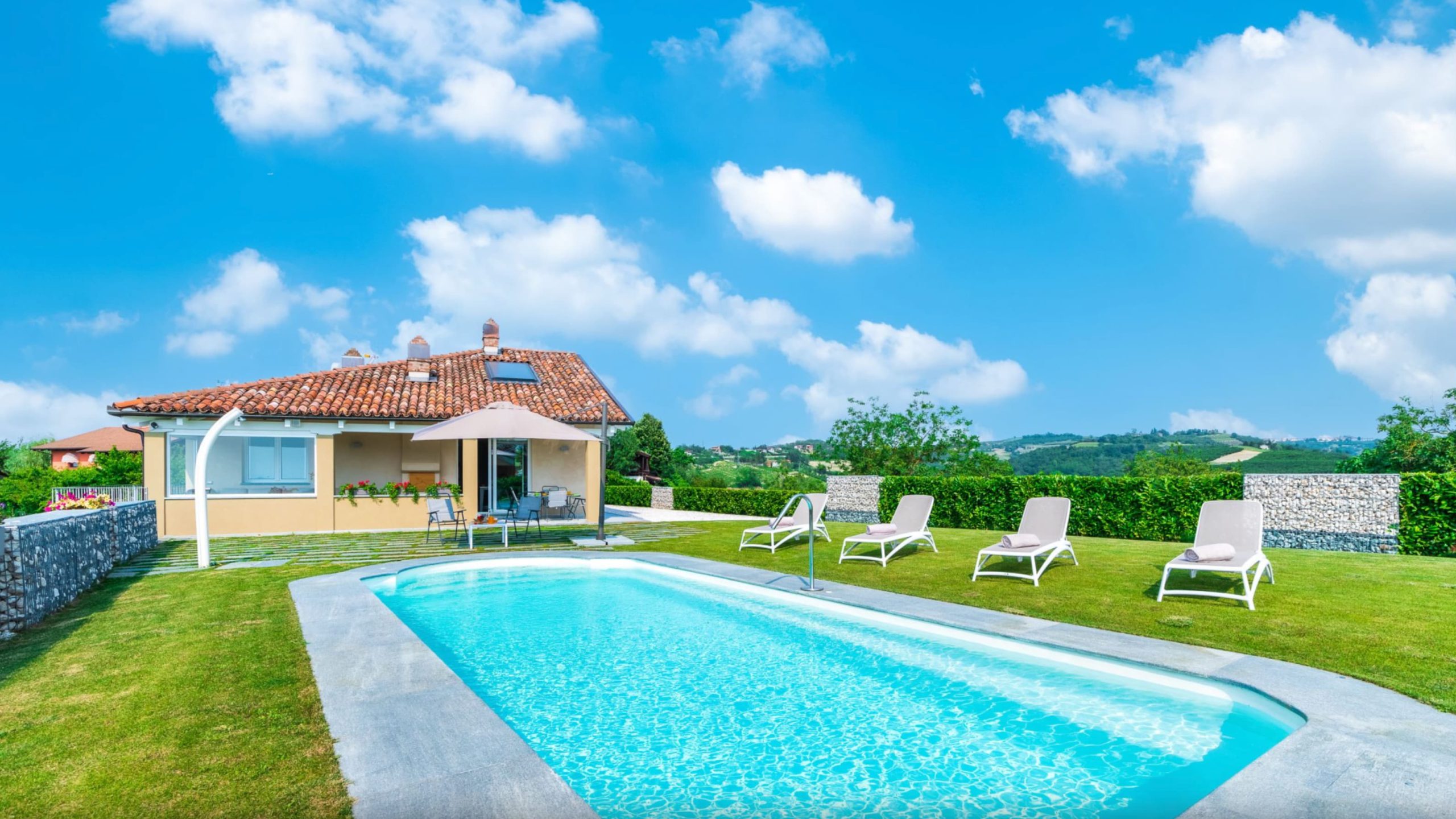
Le Marche is the region on Italy’s Adriatic side, between the Apennines and the sea, south of Emilia-Romagna and east of Tuscany and Umbria. It covers around 9,700 square kilometres and has about 1.48 million inhabitants, with Ancona as its capital. In a couple of hours you can cross it from a mountain at over 2,400 metres to a beach. It has one UNESCO World Heritage site, at Urbino, and almost none of the crowds of the regions on either side of it.
Where it is, and what it looks like
Le Marche runs down the eastern flank of central Italy. The Umbrian-Marchigian Apennines mark its western border with Tuscany and Umbria; to the north it meets Emilia-Romagna and the Republic of San Marino; to the south, Abruzzo and Lazio. The whole eastern edge is the Adriatic.
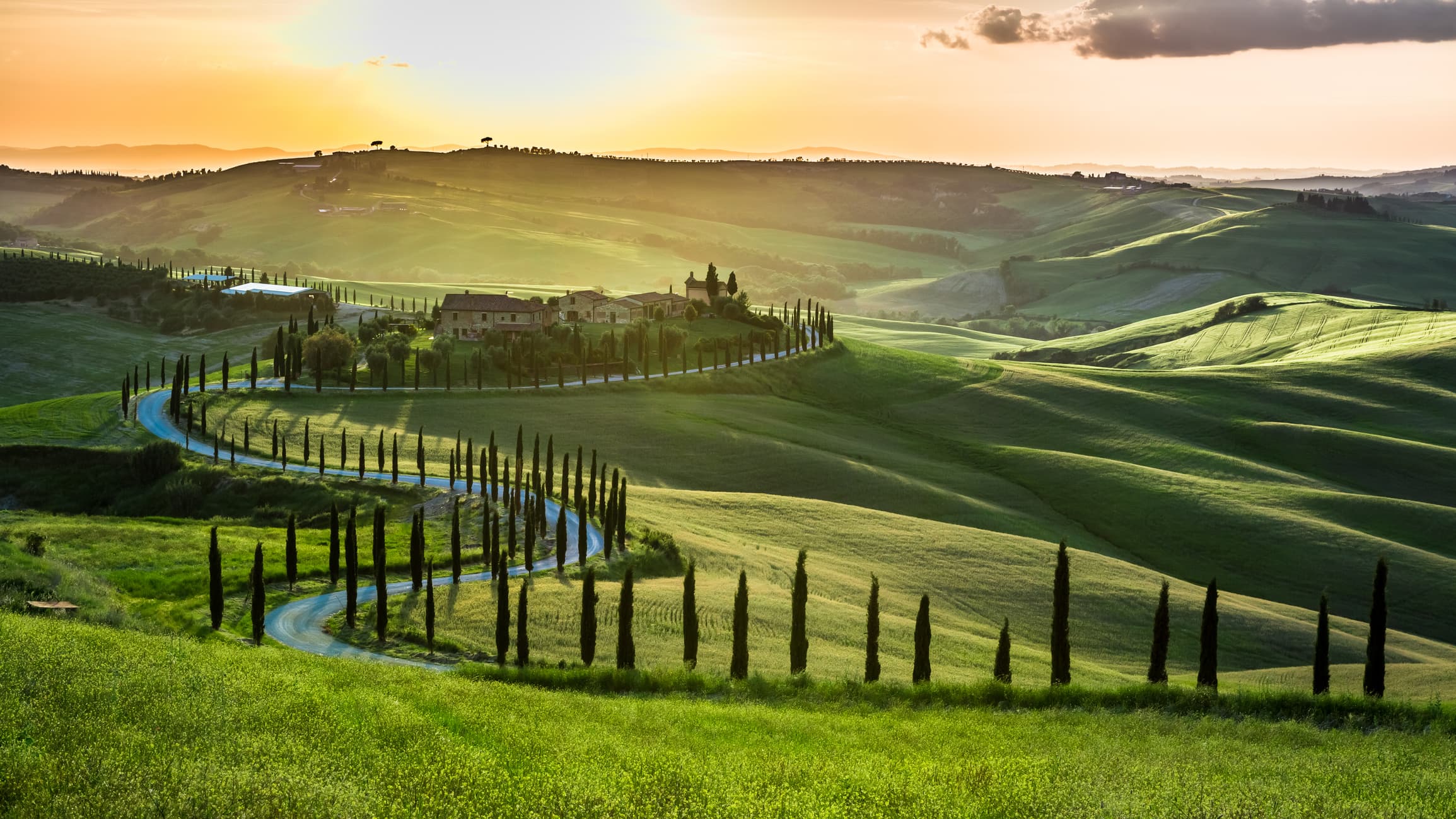
The shape of the region explains the experience of travelling in it. Rivers run in parallel from the mountains to the sea, and between them sit long ridges of hills. Almost every one of those ridges carries a walled town on top. Drive inland from the coast and you climb, descend and climb again — and each valley is slightly its own world.
Most of the region is hill. The mountains are in the west, towards the Sibillini and Monte Vettore at 2,448 metres. The coast is a long line of beaches broken, memorably, by the Monte Conero promontory just south of Ancona, where the hills come down to the sea in white cliffs.
Why you have probably not heard of it
This is worth answering honestly, because it explains what the region is like.
Le Marche has no single iconic image. Tuscany has the cypress road, Umbria has Assisi, the Amalfi Coast has the coastline. Le Marche has a Renaissance court city, a limestone promontory, an enormous cave system, a mountain range and a hundred hill towns, and no photograph that contains all of it.
It also sits in an awkward place in the tourist imagination: too far east for the Tuscany-Umbria circuit, and overshadowed on the coast by the Romagna riviera to the north. The result is a region with the density of art and landscape of its famous neighbours and a fraction of their visitors.
For the traveller this is straightforwardly good news. The queues are shorter, the prices are lower, and the towns are lived in rather than performed.
Urbino and the Renaissance
Urbino is the reason to take Le Marche seriously on art.
In the fifteenth century, under Federico da Montefeltro and his son Guidobaldo, this small hill town became one of the most brilliant courts in Europe. Piero della Francesca, Leon Battista Alberti and Paolo Uccello worked here; Baldassarre Castiglione set The Book of the Courtier in its rooms; Bramante trained in its orbit. Raphael was born here on 28 March 1483.
The Palazzo Ducale is the physical result — a palace built as an argument about civility, with its famous pair of slender towers on the façade. It now houses the Galleria Nazionale delle Marche, where Piero della Francesca’s Flagellation hangs.
The historic centre of Urbino was inscribed on the UNESCO World Heritage List in 1998, for the exceptional survival of its urban fabric and for the influence its court had on the culture of Europe.
It is a town of fewer than 14,000 people, and it still has a university, so it does not empty out of term.
The coast
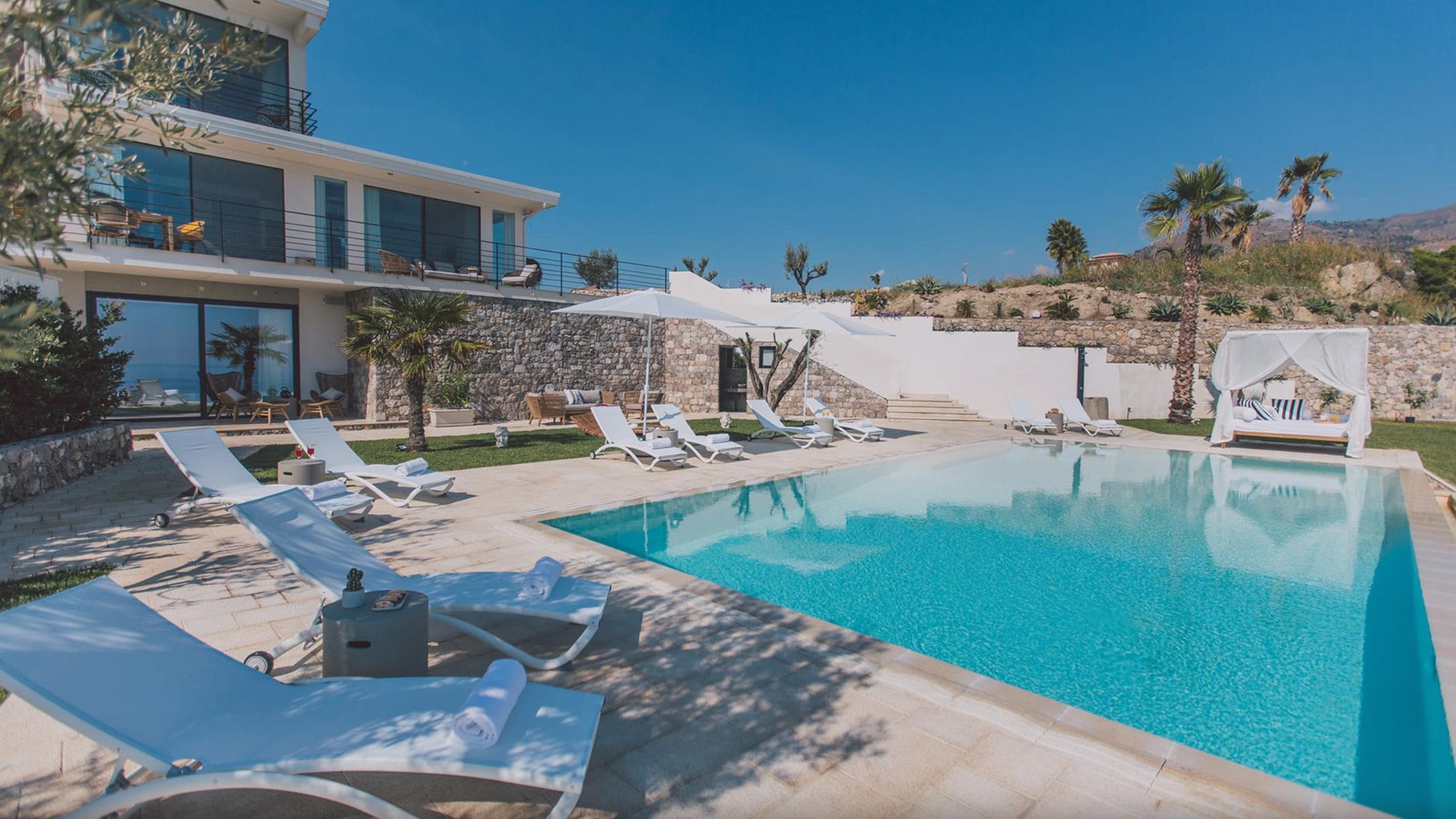
The Marchigian coastline is long, sandy for most of its length, and organised for family holidays rather than for glamour.
The exception, and the reason to come, is Monte Conero. Just south of Ancona the hills reach the sea and stop in white limestone cliffs, and beneath them are the beaches of Portonovo, Mezzavalle and the Due Sorelle — the last reachable only by boat. It is the only significant promontory on the Adriatic between Trieste and the Gargano, and it is startling if you have arrived expecting flat sand.
North of Ancona are Pesaro, Fano and Senigallia, the last with a long beach of fine sand and a serious food reputation. To the south, Civitanova, Porto San Giorgio and San Benedetto del Tronto with its palm-lined seafront.
The interior
Inland is where the region rewards time.
The hill towns are the substance of Le Marche: Ascoli Piceno with its travertine piazza, Macerata, Jesi, Fermo, Recanati, Corinaldo, Offida, Sarnano. None of them is on a coach route. Most of them have a theatre, a Renaissance palace and a church with something unexpected inside.
The Frasassi caves, in the Gola della Rossa e di Frasassi, are among the largest cave systems in Europe open to visitors, with chambers big enough to hold a cathedral.
The Sibillini mountains, shared with Umbria, are a national park of high pasture, beech woods and villages, and one of the best walking areas in central Italy.
Loreto, on its hill above the coastal plain, is one of the most visited pilgrimage sites in Italy.
The people it produced
For a region of a million and a half people, Le Marche has an implausible record.
- Raphael, born in Urbino in 1483.
- Gioachino Rossini, born in Pesaro in 1792; the city still holds an opera festival in his name.
- Giacomo Leopardi, born in Recanati in 1798, whose L’infinito was written looking at a hedge on a hill outside his father’s library.
- Maria Montessori, born in Chiaravalle in 1870.
The region is also known as the land of a hundred theatres, for the extraordinary number of historic playhouses in towns far too small to justify them. It says something about the place that they were built at all.
Food and wine
Marchigian cooking has a coast and an interior and does not blend them.
On the sea it is brodetto, the Adriatic fish stew that changes recipe every few kilometres along the coast. Inland it is pork, game and pasta — vincisgrassi, a layered baked pasta older and richer than lasagne, and the olive all’ascolana of Ascoli Piceno, large green olives stuffed with meat, breaded and fried.
The wine is Verdicchio, from around Jesi and Matelica: a white with more structure and more ageing potential than its reputation suggests. In red, Rosso Conero from the slopes of the promontory and Rosso Piceno from the south.
When to go
May and June are the best months inland: green hills, warm days, everything open, no crowds. July and August fill the coast — the Adriatic beaches are a domestic institution — while the interior stays comparatively quiet. September holds the sea warmth and empties the beaches. October is the region at its most beautiful, with the harvest and the foliage in the Sibillini.
Frequently asked questions
Where is Le Marche?
On the Adriatic side of central Italy, between the Apennines and the sea. It borders Emilia-Romagna and San Marino to the north, Tuscany and Umbria to the west, and Abruzzo and Lazio to the south. The capital is Ancona.
What is Le Marche known for?
Urbino, a UNESCO World Heritage site and one of the great Renaissance courts, birthplace of Raphael; the Monte Conero promontory and its beaches; the Frasassi caves; the Sibillini mountains; Verdicchio wine; and a landscape of hill towns between the mountains and the Adriatic.
Is Le Marche worth visiting?
For visitors who want the art, landscape and food of central Italy without the crowds of Tuscany, yes. The region has one of the finest Renaissance towns in the country, a genuinely dramatic stretch of coast and mountains behind it, and a fraction of the visitors of the regions on either side.
How do you get to Le Marche?
Ancona has an airport and a port, and the coastal railway runs the length of the region. Bologna and Rome are both around three hours by road. Once there a car is necessary for the interior, where public transport between hill towns is limited.
Is Le Marche good for a beach holiday?
Yes, particularly for families: the coast is long, mostly sandy and well equipped. The most striking stretch is around Monte Conero, where cliffs replace flat sand and some beaches are reached only by boat or on foot.