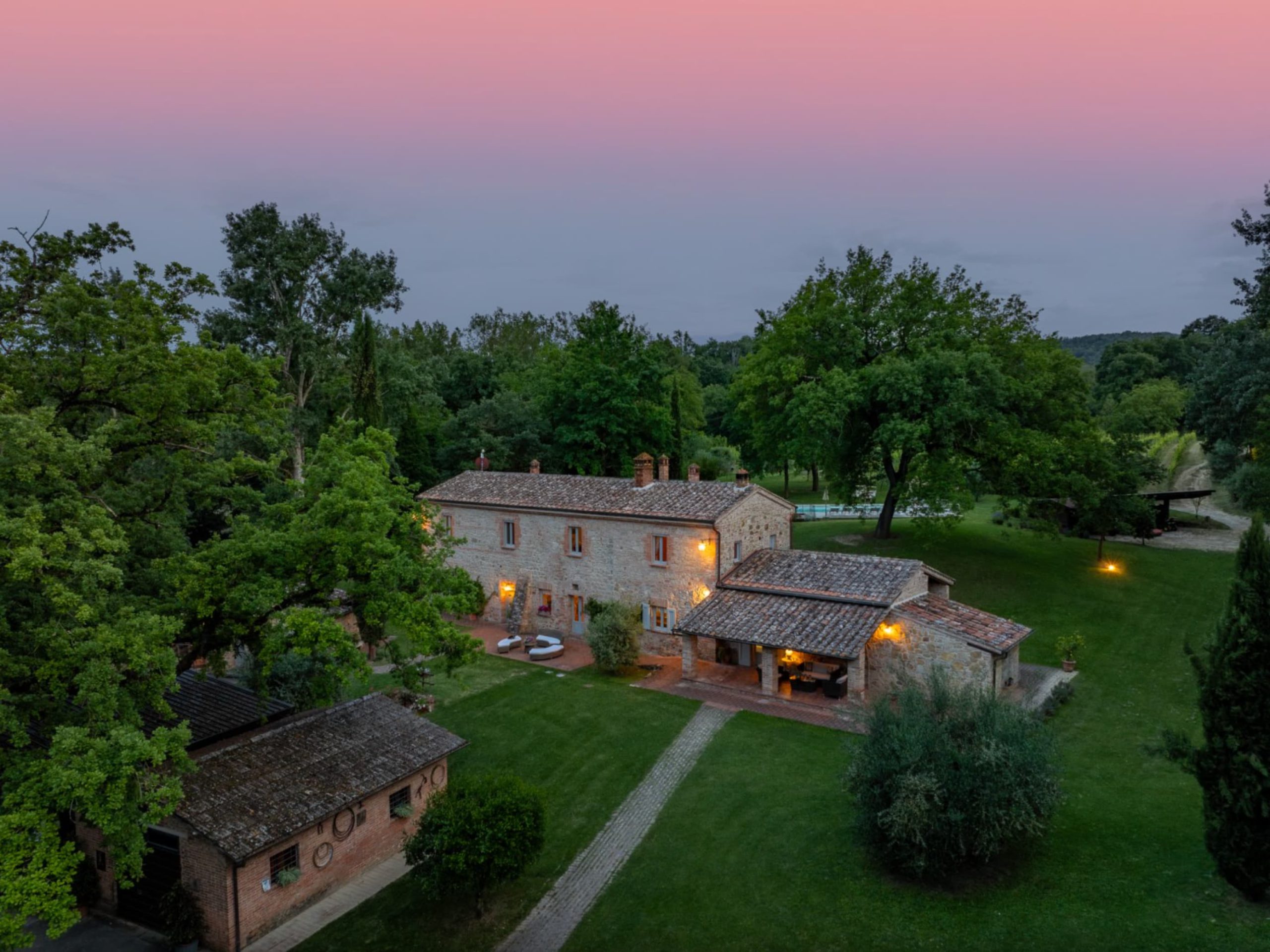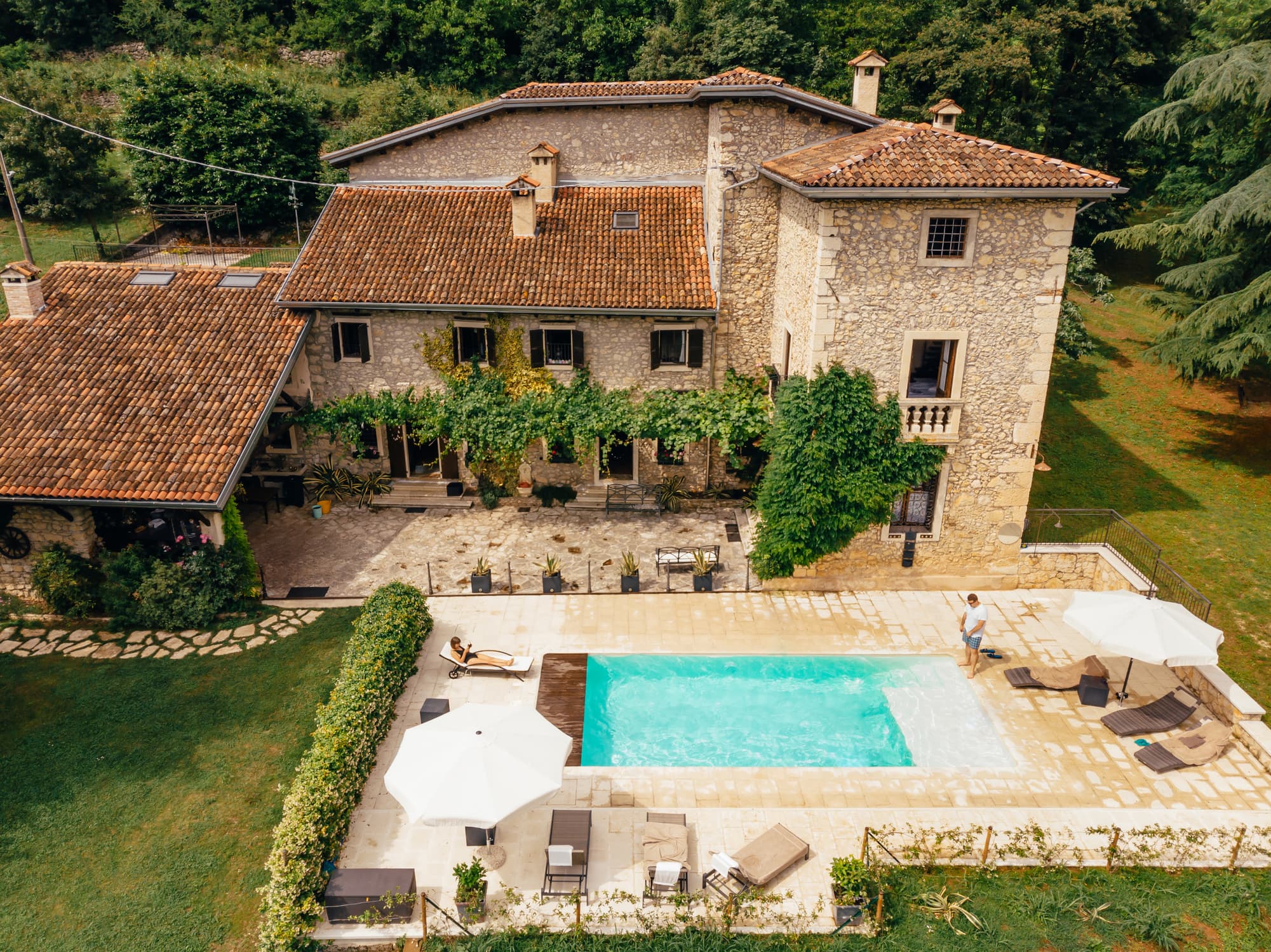
Tuscany is not one destination. Chianti is the balanced choice for a first visit, the Val d’Orcia is the landscape from the photographs, the Maremma is sea and space, the area around Lucca puts mountains, art cities and coast within half an hour of each other, and the valleys around Arezzo are the quiet, affordable part. The region covers nearly 23,000 square kilometres, crossing it takes hours, and the area you choose matters far more than the house.
Why the area matters more than the villa here
In a small region you can get the base wrong and fix it by driving. In Tuscany you cannot.
Florence and Siena are little over an hour apart, but Chianti to the southern Maremma is twice that, and the Versilia coast to the Val d’Orcia is further still. The inland roads are beautiful and slow: they follow ridges, pass through villages, and consistently take longer than the map promises.
The practical consequence is that a Tuscan week is built inside a radius of about an hour from the house. What sits inside that radius you will genuinely see; what sits outside becomes an excursion you make once and do not repeat. That is where the choice begins.
Chianti
The belt of hills between Florence and Siena, and the right answer for most people visiting Tuscany for the first time.
Both cities are day trips from here, San Gimignano is close, and the villages in between — Greve, Radda, Castellina, Panzano — are the postcard version of the region. It also has the highest density of restaurants and shops in rural Tuscany, which matters more than people expect when you are in the countryside with children.
The trade-off is that it is the best known and most expensive part of the region, and in August the main roads carry real traffic. The sea is far: an hour and a half at least.
Best for first-time visitors who want cities, villages and countryside without long drives.
The Val d’Orcia and southern Siena
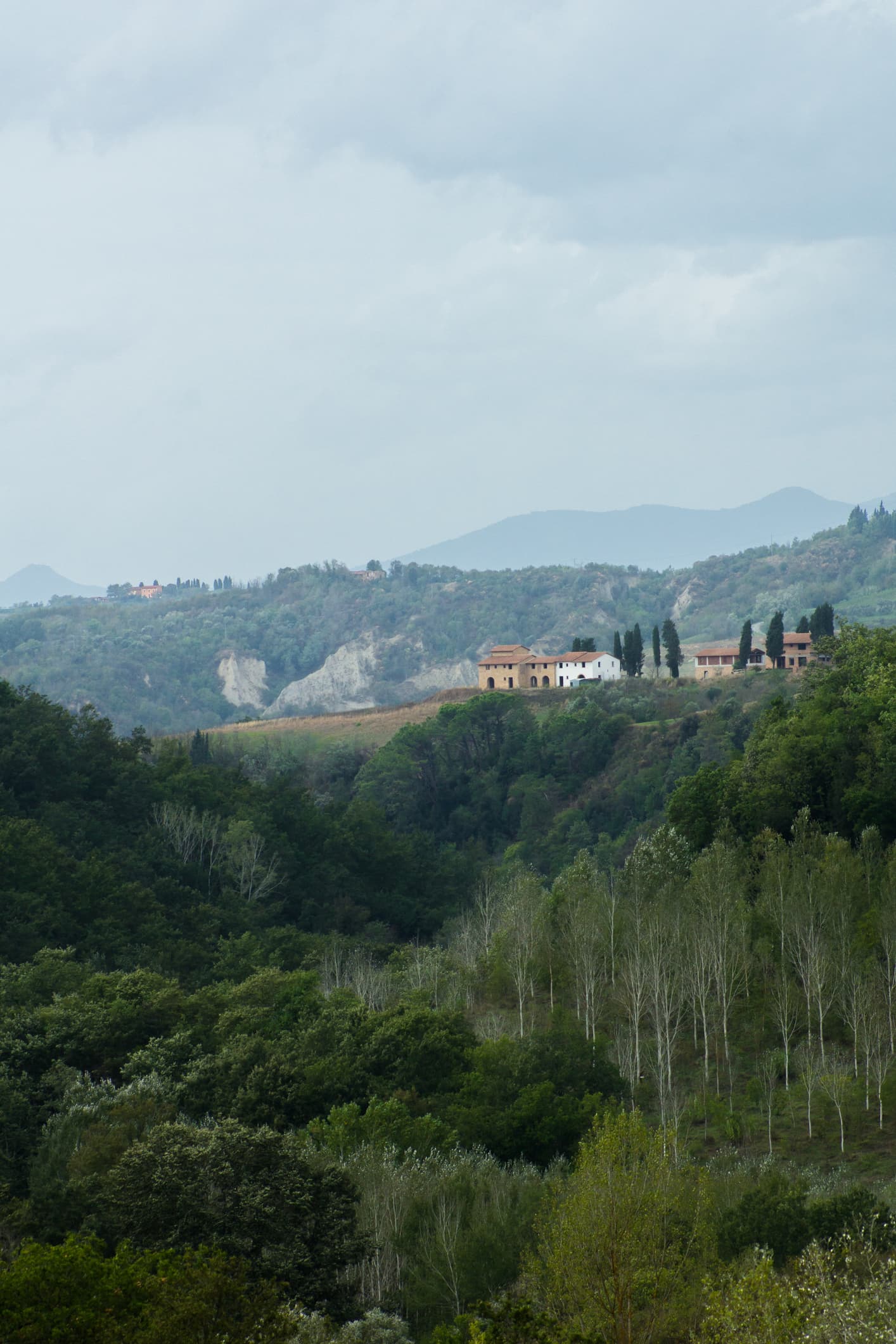
This is the landscape almost everyone pictures when they think of Tuscany: combed hills, cypresses along the ridgelines, isolated farmhouses. In 2004 UNESCO inscribed the Val d’Orcia on the World Heritage List as a cultural landscape — a place shaped by people that went on to become an aesthetic model.
Around it are Pienza, a World Heritage site in its own right since 1996, Montalcino and its Brunello, Montepulciano, and the thermal villages of Bagno Vignoni and San Casciano dei Bagni. Siena is an hour away.
It should be said that this is exposed country: little shade, open hills, and in August the heat is felt. It is also a long way from everything else, the coast included.
Best for travellers who put landscape above everything, for couples, and for anyone who photographs.
The Maremma
The south-west of the region, between Grosseto and the border with Lazio, is the Tuscany that least resembles the idea people have of it.
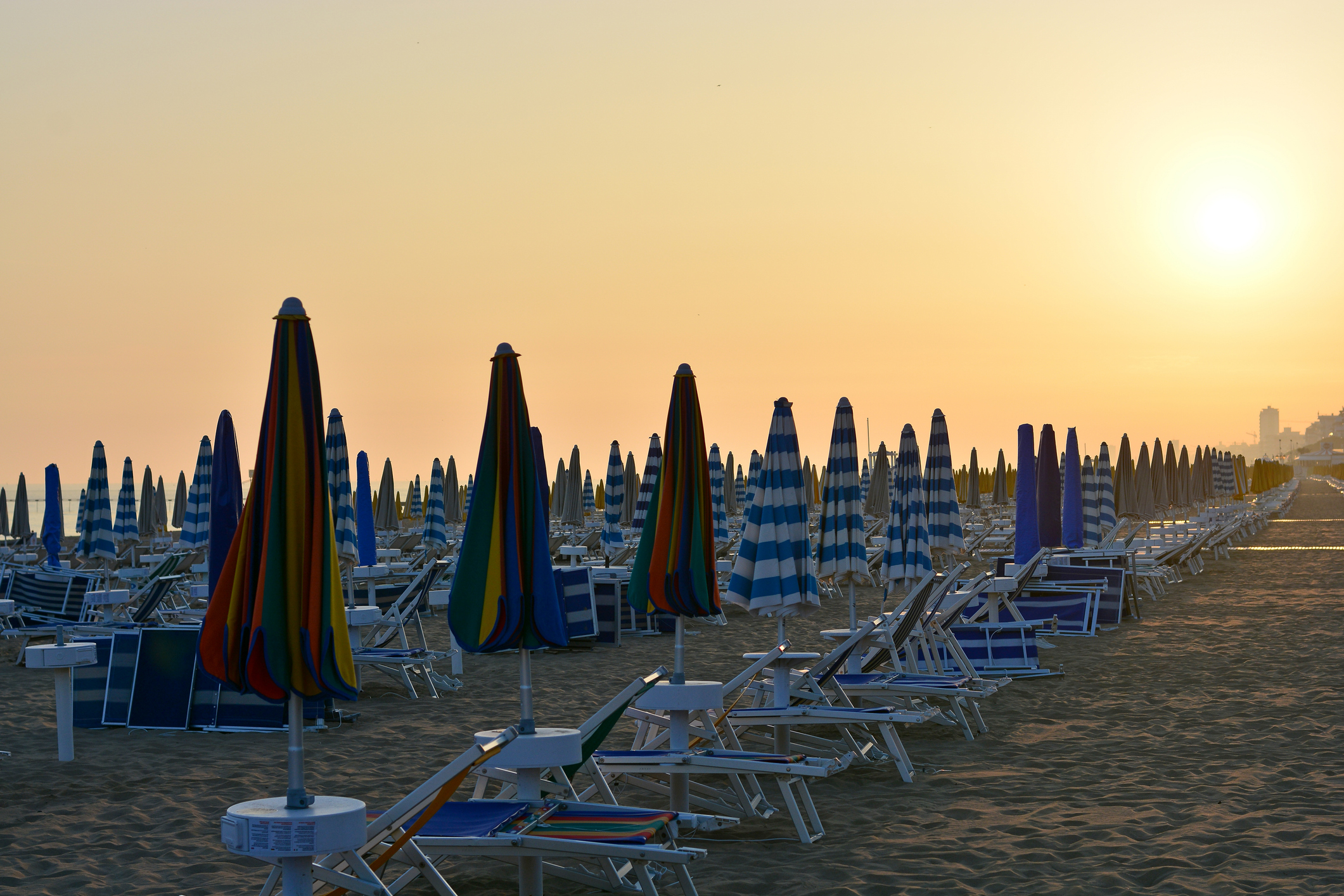
Here there are real, long beaches, the Maremma regional park, the Argentario promontory and its coves, the free thermal pools at Saturnia, and the tufa towns of Pitigliano, Sorano and Sovana. There is far more space than in the centre of the region, and the prices reflect it.
In exchange you are a long way from Florence and Siena, which become long days rather than afternoons. And in August the Maremma coast works at full capacity, like every Italian coast.
Best for families who want the sea, groups who want space, and anyone returning to Tuscany after seeing the cities.
Lucca, the Versilia and the north-west
Around Lucca, Tuscany changes character: greener, more enclosed, closer to the mountains.
Lucca is a walled city you cross on foot and circle by bicycle on the ramparts. Pisa, with its Piazza del Duomo — a World Heritage site since 1987 — is half an hour away, and the Versilia beaches are closer still. Behind rise the Garfagnana and the Apuan Alps, which are proper mountains.
It is the only part of the region where sea, art cities and mountains all sit within an hour of the same house. The Versilia in August is busy and heavily organised, but you only have to move inland to leave it behind.
Best for those who want variety in a small compass, and for groups whose members want different things.
Arezzo and its valleys
The eastern corner of the region — the Casentino, the Valdarno, the Arezzo side of the Val di Chiana — is the Tuscany the tourist circuits skip.
In the church of San Francesco, Arezzo holds Piero della Francesca’s fresco cycle of the Legend of the True Cross, one of the most important things in Italian Renaissance painting and seen by a fraction of the crowds at the Uffizi. Around it are Cortona, Anghiari, Poppi, the Casentino forests and the monasteries of Camaldoli and La Verna.
Prices are the lowest in the region and summer traffic barely exists. The Umbrian border is close, so from here you can reach two regions.
Best for returning visitors, walkers, and anyone who wants the region without its most trodden parts.
The areas compared
| Area | Strength | Limitation | Distance to the sea |
|---|---|---|---|
| Chianti | Florence and Siena as day trips | Priciest and busiest | Over ninety minutes |
| Val d’Orcia | The most famous landscape | Exposed, far from everything | About ninety minutes |
| Maremma | Sea, space, value | Far from the art cities | Minutes to half an hour |
| Lucca and Versilia | Sea, cities and mountains close together | Crowded coast in August | Half an hour |
| Arezzo and its valleys | Quiet and value | Fewer famous names | Over two hours |
Choosing by the trip
- First time in Tuscany — Chianti. Cities, villages and countryside all within a day.
- Landscape above all — the Val d’Orcia.
- Families who want the beach — the Maremma.
- A group who want different things — Lucca: sea, art and mountains from one base.
- Returning to Tuscany — Arezzo and its valleys.
- Travelling in August on a budget — inland Arezzo or the interior of the Maremma.
A note on distances
Tuscany has seven UNESCO World Heritage sites: the historic centre of Florence, inscribed in 1982; the Piazza del Duomo in Pisa, 1987; San Gimignano, 1990; Siena, 1995; Pienza, 1996; the Val d’Orcia, 2004; and the Medici Villas and Gardens, 2013.
They are spread across the whole region, and that is precisely the point: no single base reaches all of them comfortably. People who try to see everything spend the week in the car. It is better to choose an area, accept that two or three things will wait for another trip, and enjoy what sits within an hour.
Frequently asked questions
What is the best area to stay in Tuscany?
For a first visit, Chianti, because it puts Florence, Siena and the hill villages within a day. For landscape, the Val d’Orcia. For the sea, the Maremma. For variety, the area around Lucca. For quiet and value, the valleys around Arezzo.
Is it better to stay near Florence or near Siena?
Chianti sits between the two and allows day trips to both, which is usually the best solution. Staying inside either city only makes sense if you do not want to drive, in which case a countryside villa is not the right format.
Which part of Tuscany is closest to the sea?
The Maremma, where some properties are minutes from the coast, and the Versilia and Lucca area, at around half an hour. From Chianti and the Val d’Orcia the sea is over ninety minutes away.
Which part of Tuscany is cheapest?
Generally inland Arezzo and the interior of the Maremma, which are also the least crowded. Chianti and the Val d’Orcia are the most expensive areas in the region.
How long does it take to drive across Tuscany?
Longer than the map suggests. Inland roads follow ridges and valleys and are slow: end to end the region comfortably exceeds three hours. It is better to build the week within a radius of about an hour from the house.