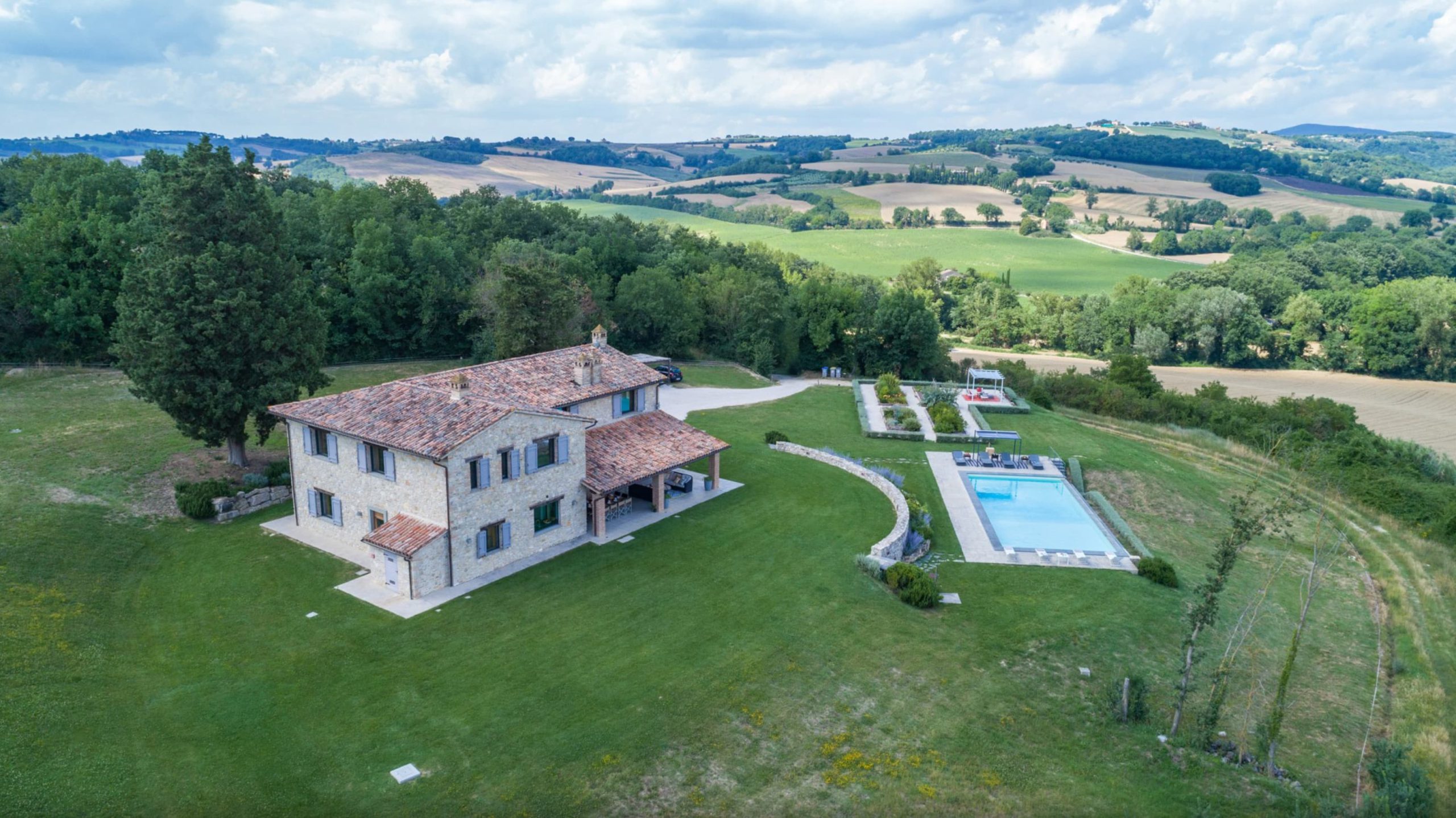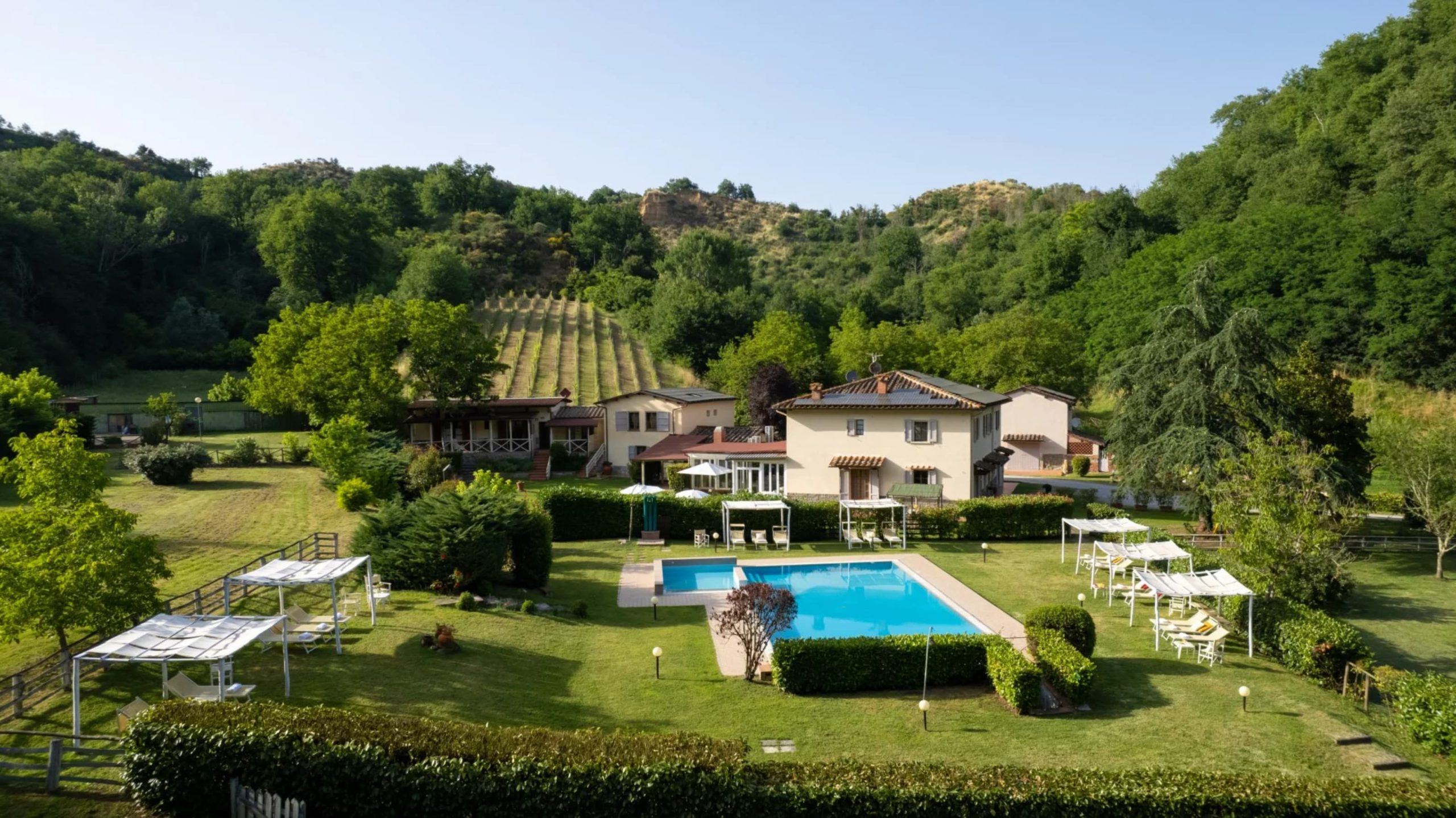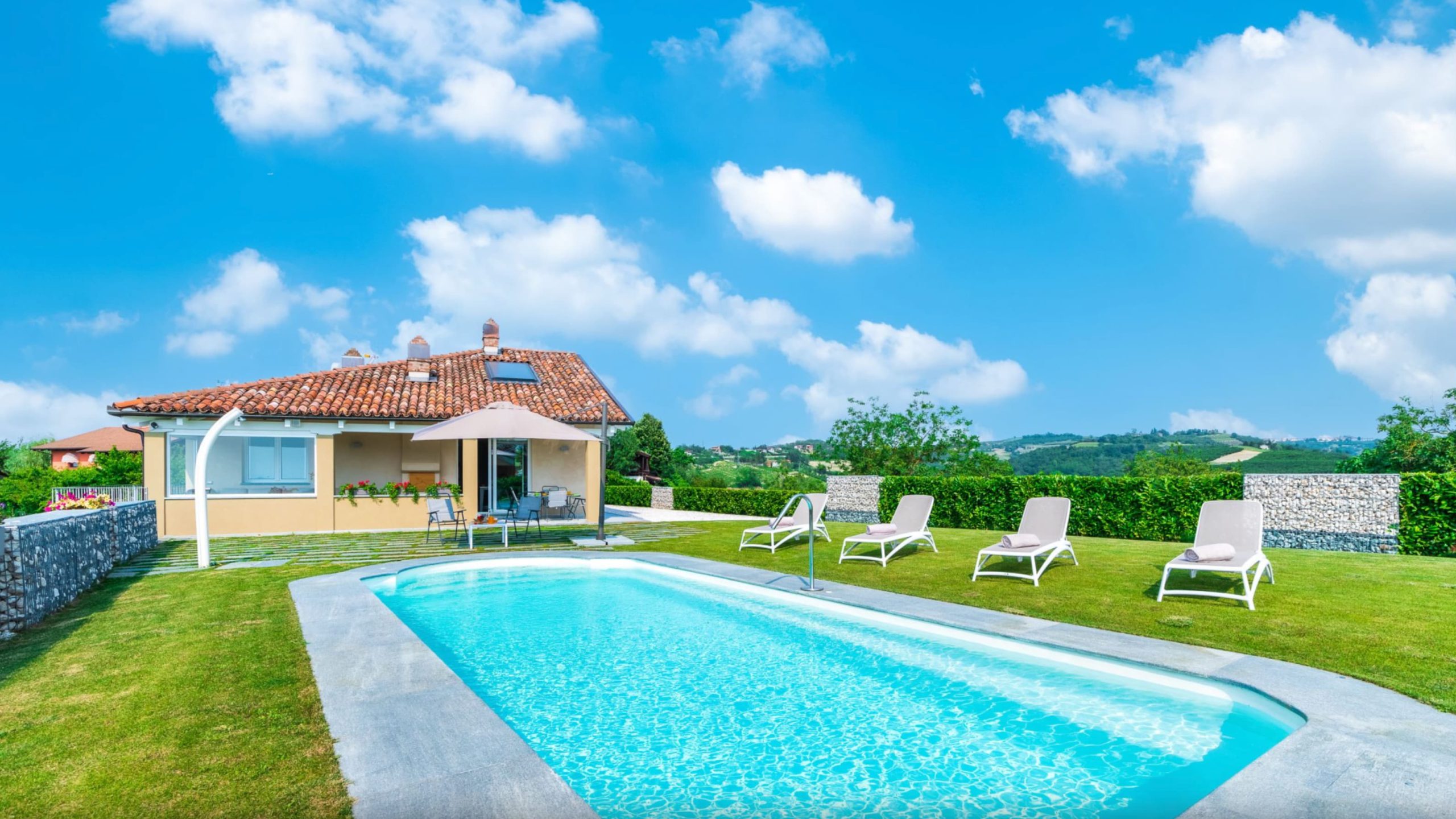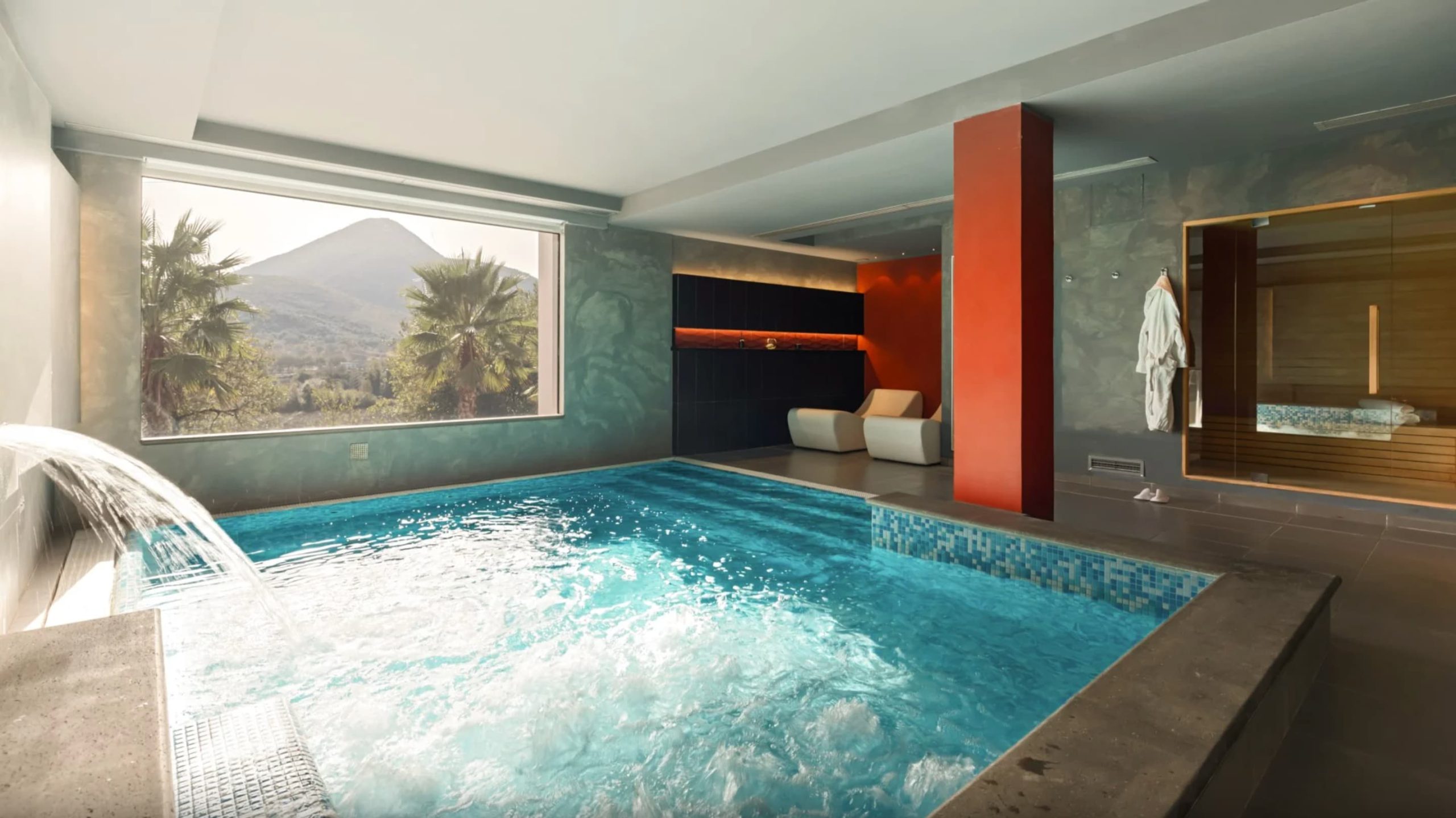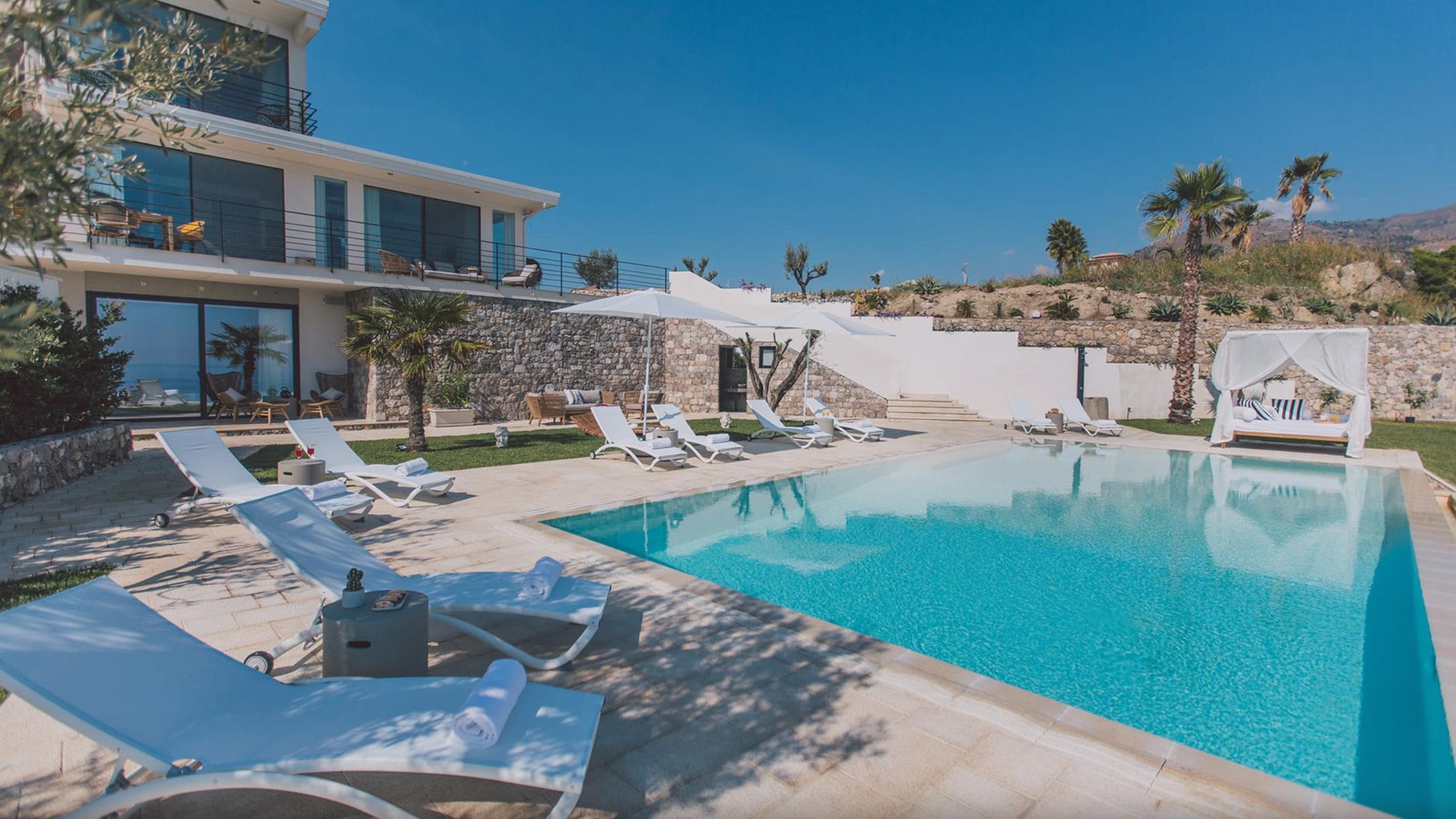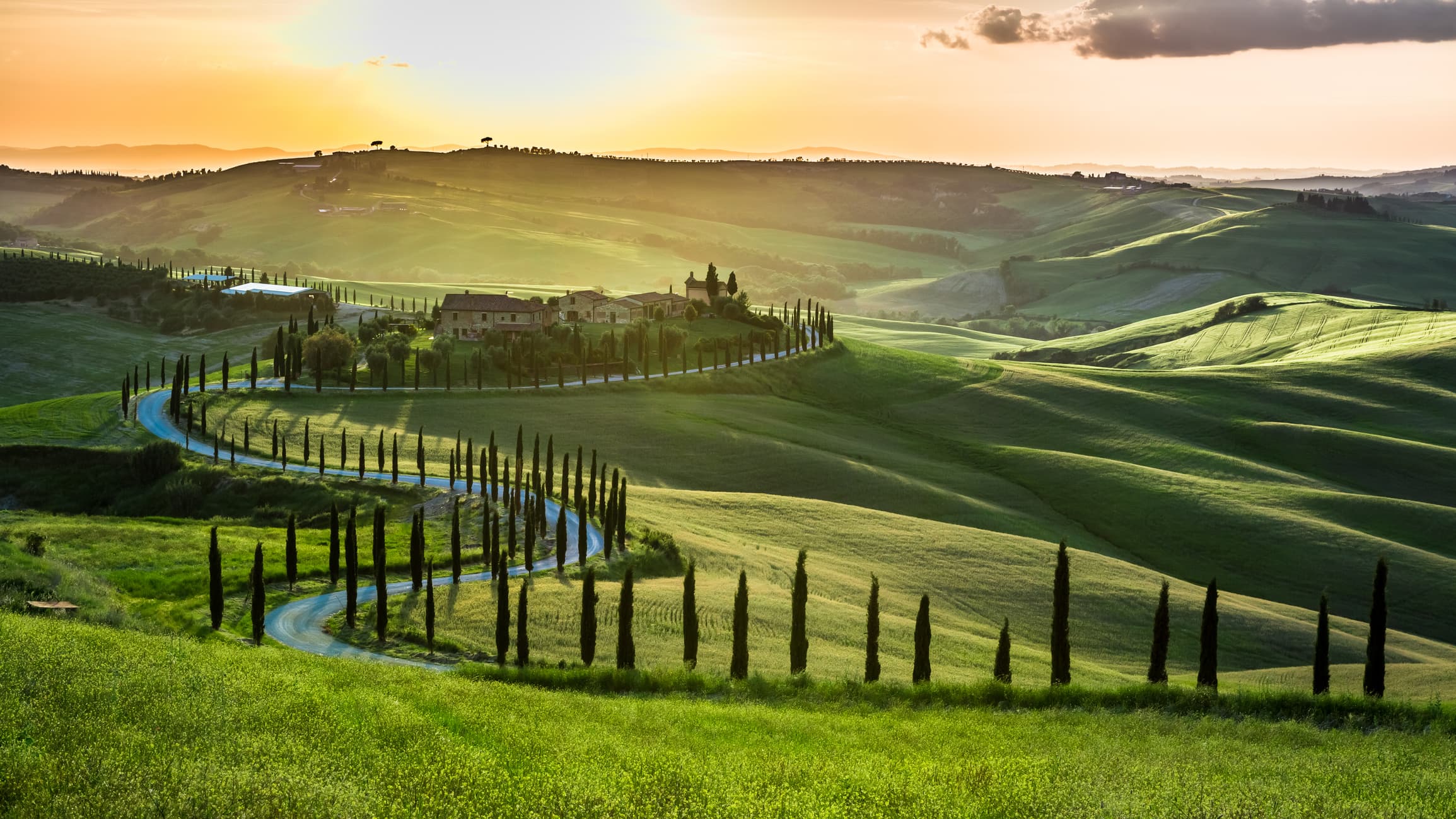
A villa holiday in Italy means renting a whole house, usually in the countryside and usually with a pool, for a week or more. It works best for families and groups, in the months either side of high summer, and in regions where the countryside is close to both towns and the sea. The three decisions that shape the week are the region, the position of the house within it, and the time of year — in that order, and before anything else.
Why a house rather than a hotel
The case for a villa is not really about luxury. It is about control of the day.
You eat when you want, which matters enormously with small children and with groups whose body clocks disagree. You have somewhere to go in the afternoon when it is too hot to be outside. You cook when you feel like it and go out when you do not. And you occupy a place rather than visiting it, which after a few days changes the quality of the whole trip.
It is worth being clear about when it is the wrong choice. For two or three nights, a villa is impractical: the setup cost in time and shopping outweighs the benefit. For a couple who want to walk out of the door into a city, a villa in the countryside is the opposite of what they want. And for anyone who does not want to drive, it does not work at all.
Choosing the region
Italy is not one destination and the regions are genuinely different holidays. A short orientation.
Sicily is the largest island in the Mediterranean, with a coast, a volcano and a Baroque interior. It suits people who want sea and culture in the same week, and it rewards staying inland: the southeast around the Val di Noto, the slopes of Etna and the Madonie mountains all stay comparatively calm even in August.
Umbria is the only Italian region with neither a coastline nor a foreign border, and it is almost entirely hill and mountain. There is no beach season, so its calendar follows the harvest instead. It suits walkers, food and wine travellers, and anyone who has already seen Tuscany.
Le Marche runs from the Apennines to the Adriatic in about sixty kilometres. It has one of Italy’s great Renaissance towns at Urbino, a genuinely dramatic coast at Monte Conero, and a fraction of the visitors of the regions on either side.
Tuscany is the most famous and the most organised for visitors, with the greatest concentration of well-known towns. It is the natural first choice for a first trip and the busiest in high summer.
The honest guidance: first-time visitors usually want Tuscany, and returning visitors are usually better served by the others.
Choosing where within the region
This decision matters more than most people expect, and it comes down to three variables.
Distance to the sea. Thirty minutes each way is a daily habit; an hour each way is an expedition you make twice and then stop making. Decide honestly what you will do most days.
Altitude. The best single predictor of how a house sleeps in July and August, and almost never stated in a listing. At four hundred metres the nights cool down. At sea level they do not.
Isolation. Rural properties range from a house alone in fifty hectares to a house sharing a lane with three neighbours. Both are legitimate; the difference is rarely obvious from photographs, so it has to be asked about.
When to go
May and June are the best months for landscape and for walking: warm days, long light, everything open, the coast still empty.
July and August are hot and busy, with the peak in the ten days either side of Ferragosto on 15 August. The sea is at its warmest and the interior stays much calmer than the coast.
September has a strong claim to being the best month of all: the sea holds the heat of August, the harvest begins, and the crowds thin sharply once Italian schools return in the middle of the month.
October is mild, clear and almost empty, and the best month for the interior. From November the country turns inward, which is excellent for cities, food and archaeology and poor for swimming.
What to check before booking
A short version of the questions that decide a week.
- The altitude of the property, and the driving time to the nearest beach and shop
- Whether the pool is for exclusive use, and whether it is fenced
- Which bedrooms have air conditioning, and whether one is on the ground floor
- Shade on the terrace and around the pool
- The condition of the access road
- The full cost including final cleaning, tourist tax and deposit
- Who to contact if something fails during the stay, and how quickly they arrive
Groups and families
Villas suit both, for different reasons and with different priorities.
For families with young children, the things that matter are a short drive to a sandy, gently shelving beach, a kitchen that allows children to eat early, a pool with easy entry, and a shop within ten minutes.
For groups, the number to look at is not bedrooms but bathrooms — roughly one per three or four people — plus a second living area so that twelve people are not all in the same room, and a table that seats everyone outdoors. The other essential is agreeing how the cost is split before anyone arrives.
What can be arranged during the stay
A villa does not have to mean doing everything yourself. Most areas offer a private chef for an evening or two, transfers from the airport, mid-stay cleaning, wine tastings and cots or extra beds.
A chef on the arrival evening is the single most useful of these: you land, you drive, you find the house, and nobody wants to go out again. For a group of ten or twelve the cost per head is often closer to a restaurant than people expect.
How the costs work
The weekly rate is rarely the final figure, and the difference is made of predictable items: final cleaning, tourist tax set by the municipality and usually charged per person per night, a security deposit, and sometimes separately metered heating. Linen and towels are normally included, but the number of changes varies. Where you book also affects the total, so compare totals rather than headline rates.
Booking
For July and August, book in winter or early spring of the same year. Peak weeks around Ferragosto go first everywhere, and large properties are the very first, because they are a small subset of any portfolio. For May, June, September and October the window is wider, though well-positioned houses still go early.
Frequently asked questions
What is a villa holiday in Italy?
Renting an entire house, usually in the countryside and usually with a private pool, for a week or more. It differs from a hotel in giving you a kitchen, private outdoor space and control over the shape of the day, and it suits families and groups particularly well.
Which region of Italy is best for a villa holiday?
Tuscany for a first visit, because of the concentration of famous towns. Sicily for sea and culture together. Umbria for walking, food and quiet. Le Marche for landscape and coast with very few visitors. Returning visitors are usually better served by the last three.
When is the best time for a villa holiday in Italy?
May, June, September and early October. September is arguably the strongest: the sea is at its warmest and the crowds thin once Italian schools return in the middle of the month. July and August are hot and busy, though the interior stays much calmer than the coast.
Do I need a car for a villa holiday in Italy?
Yes. Rural properties are not served by public transport, and the combination of a countryside base with days at the coast or in the towns only works with a car.
Is it better to stay inland or near the sea?
Inland at altitude for most of the summer, provided the sea is within about half an hour. Nights cool down at four hundred metres in a way they do not at sea level, and inland properties usually offer more space and privacy for the same money.
What extra costs should I expect?
Final cleaning, tourist tax charged per person per night, a security deposit and occasionally metered heating. Linen and towels are normally included but the number of changes varies.
How far in advance should I book?
For July and August, in winter or early spring. Large properties and the weeks around Ferragosto in mid-August are the first to be committed. For the shoulder months the window is more forgiving.
Emma Villas manages villas across Italy under exclusive agreements with their owners, with local teams in each region. Every property has been visited and assessed by our staff, and services such as a private chef, transfers and in-stay assistance are arranged on request.